Saturday, April 27, 2013

Bellah 3: The birth of god

When did god arrive? Turns out, that's not such a hard question.

One would think that the historical moment of our discovery of god as the eternal and creative being of the universe would be a little hard to pin down. In our hearts, we always knew he (she? it?) was there, pulling the strings, blowing the winds around, and separating the wheat from the chaff after death. Right?

But while primitive societies know of "powers" responsible for each of the mystifying aspects of their lives, they do not as a rule make of these powers a well-worked out hierarchical pantheon, let alone unify them into the kind of mind-blowing monotheism that became so popular in later societies. Robert Bellah, in his wonderful book "Religion in human evolution" devotes quite a bit of time to characterizing such non-systems:
"Aboriginal Australia has been cited, notably by Mercea Eliade, following Pater Schmidt, as an important case of Urmonotheismus, primeval monotheism, because of the 'High Gods', or 'Sky Gods' to be found there. But among the central desert peoples that I have focused on [because of their relatively low contact with missionaries and Western culture] there are no High Gods, indeed no gods at all. The Ancestral Beings, like the powerful beings of the Kalapalo, are not worshipped, but identified with in ritual enactment. It was the absence of gods, worship, and even prayer, that led early Western observers to declare that the Aborigines had no religion at all, thus missing entirely the rich web of belief and practice that in fact characterize Aboriginal life. So where are these High Gods, this primeval monotheism?"

After which Bellah launches into a discussion of how contact with the religious concepts of Westerners as well as the attendant existential catastrophes, prompted a kind of desperate millenialism, similar to the incredibly sad ghost dancing of Native Americans, which involved some worship, prophetic relationship with god, moral prescriptions, etc.

Turning to native American religions, specifically the Navajo, Bellah adds:
"Several writers have attempted to reconstruct the hunter-gatherer religion of the early Apacheans by looking for comparative material among the Northern Athabascans and the groups through whose territory the Southern Athabascans must have passed before reaching the Southwest [becoming the Navajo]. Luckert posits the idea of a 'prehuman flux' as a kind of baseline for hunter beliefs, not only in North America, but perhaps everywhere. By this term he points to a 'time' when all things were interchangeable; not only powerful beings, humans, animals, but insects, plants, and features of the natural environment such as mountains, were all 'alive', and could take the form of one another. Eventually some of the powerful beings shaped the earth and separated the 'peoples' (including animals, plants, mountains, and so on) into their present forms. However the primordial flux is not really in the past, but can be returned to through ritual and the trance states that accompany ritual."

Clearly the garden of Eden story is a faint flicker of this conception in the Judeo-Christian tradition, turned into a jeremiad of sin & misogyny, and then succeeded by countless other mythical developments. But native versions express an egalitarianism and direct participation- religious democracy, one might say- that reflects their cultural setting and practices.

But then agriculture appears, bringing the possibility of wealth accumulation, settlement and the impossibility of escape from the group, magnified levels of status, intensified warfare, and the state.

In a discussion of pre-contact Hawaii, with its transition from a kinship/tribal system to a primitive state system run by a king with so much power that human sacrifice was part of the menu, Bellah notes that this is where gods are (or more specifically, God is) born.

"If we think of Hawai'i, the distinction between the ali'i and the commoners is just such a clear class distinction. Another way of making the same point without focusing quite so centrally on class is to say that the key distinction is between the state as a secondary formation and the rest of society. That this is close to what Trigger means is clear when he writes, 'wealth tended to be derived from political power far more frequently than political power was derived from wealth.' So it is not class as defined in terms of relation to the means of production that is critical in these societies, but class as defined in relation to political power. 
Also important for Trigger is the point the kinship, although remaining significant in different ways for both the rulers and the ruled, no longer, as in tribal and chiefdom societies, is the 'basic principle governing social relations.' He adds one further point of great importance: 'Just as class has replaced real and metaphorical kinship as a basis for organizing society, so religious concepts replaced kinship as a medium for social and political discourse.' Of course, symbolic action and expression that can be called religious appear at every level of social organization, but something new on the religious realm appears in archaic societies: gods and the worship of gods. My reading of Trigger's study reinforces my sense that what makes archaic society different from its predecessors is a complex religio-political transformation that gives rise to two ideas that are essentially new in the world: kingship and divinity, in many ways two parts of a single whole."

In another section, he discusses this transition from tribal to state organization in more detail:

"I have referred to the despotic founders of early states, who came to power through blood and terror as they almost always did, as upstarts of the kind that tribal society usually managed to repress. As opposed to Girard's theory, it would seem that the first killing among culturally organized humans was not the killing of scapegoat, but the killing of an upstart who genuinely threatened to revive the despotism of the old primate alpha male. We have argued that hunter-gatherer egalitarianism is not the abandonment of dominance, but a new form of it, the dominance of all against each other. effective dominance, however, brings on not only submission but resentment, and a desire to resist dominance. That is why upstarts wishing to re-create despotism can be found in every society. We do not ned to go to sociobiology for an understanding of upstarts: modern philosophy has had more than a little to say about this human proclivity. Hobbes spoke of the 'desire to be foremost,' Hegel of the fundamental human dialectic of 'master and slave,' Nietzsche of the 'will to power.'
...
The warrior band, however, can turn out to be a self-defeating project if all it does is stimulate the creation of other warrior bands leading to an ever escalating increase in violence (a real possibility- the 'nightmare of history' of which James Joyce spoke). Chiefdoms are notoriously ephemeral, but early states are also quite fragile. It is only when a successful warrior can fashion a new form of authority, of legitimate hierarchy, that he can break the cycle of violence and hope for lasting rule, perhaps one to be inherited by offspring. But this involves a new relation between gods and humans, a new way of organizing society, one that finds a significant place for the disposition to nurture as well as the disposition to dominate. This is the task that archaic religion and societies have to complete if they are to be even briefly successful. In doing so they elaborate a vast hierarchical conception of the cosmos in which the divine, the natural, and the human are integrated."

and ...
"Both tribal and archaic religions are 'cosmological,' in that supernature, nature, and society were all fused into a single cosmos. The early state greatly extended the understanding of the cosmos in time and space, but, as Thorkild Jacobsen argued, the cosmos was still viewed as a state- the homology between sociopolitical reality and religious reality was unbroken. As we have seen the establishment of the early state and the beginning of archaic society destroyed the uneasy egalitarianism of hundreds of thousands, if not millions, of years of hominin evolution, but in so doing made possible much larger and more complex societies. A dramatic symbolism that combined dominance and nurturance produced a new sense of divine power combined with social power, enacted in entirely new forms of ritual, involving, centrally, sacrifice- even human sacrifice- as a concrete expression of radical status difference."

So religion appears to be the metaphorical and archetypal expression of the gestalt people find themselves in, projecting their society into their cosmos, rather than the reverse, let alone studying the cosmos on its own terms. If the society has an omnipowerful god, so does the religion. If the society is an egalitarian community of interdependent family and tribal units, so are the beings and gods of their imagination. Bellah also goes through the experience of Israel, where the whole Moses story was cooked up out of whole cloth, as a nostalgic reflection on the Davidic state, probably during exile in that other great state of Babylon / Assyria.

Does this give religious people pause? Probably not. Every religion posits as it first rule that it is correct, and if it recognizes antecedent forms and doctrines at all, poses as the final, correct, and inerrant culmination of a, let us say pseudo-scientific process of discovery / revelation by which its prophets gained the current dispensation.

But, not to put to fine a point on it, that view is precisely backward. It is social setting and ideology that calls forth the religious metaphor, however earnestly elaborated in vast scriptures and schools of theology. For all the standard religions, which use a corpus of myth to intimate a reality with which we are now far more familiar by scientific means, the whole story, including god, is logically, if not artistically, dead. The myth, as discussed in the last post, may remain a sagging sociological artifact, but its many claims to be "true" about "reality" in some critical way that endows its community and especially its priests with mystical knowledge, including powers of healing, historical insight, prophecy and salvation ... well, that couldn't be more absurd, beyond a bit of psychological acuity and placebo effect.

But it wasn't the pointy-headed attacks of the philologists, historians, and scientists that did it in. No, that was only part of a larger social retreat during the enlightenment from state-centered kingship and totalitarianism, towards a utilitarian, domesticated state, that slowly strangled the monotheistic god. Communism was a fascinating detour on this road, installing mundane despotism while denying its celestial equivalent- not a very successful experiment! It has been a long road from terrestrial democracy to democracy in the sky, but we are slowly getting there, whether through the pathetic watering-down of Christian dogma (goodbye hell!), or through the simple exodus of apathetic unbelievers.

And what does the future hold for religious ideology, now that totalitarian kingship is going out of style and with it, the monotheisms of totalitarian kingship? Tune in next week!


  • A few problems with Islam, when one loves too much. But then some help, too.
  • Outstanding interview with far-North anthropologist Jean Briggs.
  • Inequality increases relentlessly.
  • Economic growth is doomed- we have picked all the low-hanging fruit, at least until the robots take over. On the other hand, perhaps we should better tend to ecological catastrophe than worry about a few points of growth here or there.
  • Some serious problems with Obamacare.
  • Fraught identities of immigrants.
  • There is no tech worker shortage.
  • Reality as a religious identity.
  • Bitcoin- the perils of an inelastic currency.
  • The curious case of Japan, heading for resolution?
  • Economics quote of the week, from Paul Krugman:
"And this makes one wonder how much difference the intellectual collapse of the austerian position will actually make. To the extent that we have policy of the 1 percent, by the 1 percent, for the 1 percent, won’t we just see new justifications for the same old policies?"

Saturday, April 20, 2013

Bellah 2: What is a true myth?

Myths are metaphors for what we don't know. Their truth is expressive, not analytical.

Robert Bellah's wonderful book on Religion in Human Evolution has an overarching schema, which is that humans progress (or at least move over evolutionary and cultural time) from a mimetic (ritual) mode of social existence, to a mythic mode, to an abstract, theoretical mode of social development. None of these is lost, but new modes are added onto the prior ones. Thus we enact rituals in our daily lives and in our most meaningful events at the same time that we find meaning in various myths- religious, civic, professional, or familial, etc., at the same time that we in the modern age are obsessed with the analytical quest to find the optimal economic system, the most just state structure, and the most fulfilling personal life.

Being human turns into a rather confusing project, richly deserving all the perplexed attention that the arts have devoted to it.

It is one reason why telecommuting and online education are not as popular as one would have thought at the dawn of the internet age- that face-to-face ritual remains very important to most people, and while we can not always articulate what it is about physical interaction and enactments that is so important, doing without them feels quite empty to many people.

And likewise- following last week's blog on the functional continuity of religious practice in the most unlikely settings of science and atheism- with myth, which continues to shape our lives even in this secular, post-modern age. An example is American exceptionalism- the conviction that we, for some obscure reason having to do with boundless frontiers, liberal / enlightenment founders, and ethnic mixture, have some god-given right or duty to tell the rest of the world how to do things. It couldn't just be that we are more powerful than they are, due to pretty much unrepeatable cultural pathways of economic and technological development. No, we are better people, more good and moral, whom others should recognize as their natural superiors. Or something like that.

All this is buttressed by our various civic cults and stories. However vociferously those pesky lefty historians try to tear down our forebears and tell the stories of those who were oppressed, we are going to just keep on flying that flag anyhow. Even the stars and bars, if it comes right down to it, dagnabbit.

So, as Bellah maintains, myths are not about truth. They tell a story that functions in forming our various emotional and cognitive archetypes into a well-peopled narrative that says who and why we are. They metaphorically represent our position in the world:

"Chaisson would have avoided this error had he been clear about this: myth is not science. Myth can be true, but it is a different kind of truth from the truth of science and must be judged by different criteria, and the myth he tells, [the modern scientific story of the cosmos with a positive inflection, which Chaisson terms a true myth], though it draws on science, is not science, and so cannot claim scientific truth. I would agree that the myths told by the ancient Israelite prophets, by Socrates, Plato, and Aristotle, by Confucius and Mencius, and by the Buddha, just to stay within the purview of this book, are all true myths. They overlap with each other and with Chaisson's myth, but even in their conflicts, which are sometimes serious, they are all worthy of belief, and I find it possible to believe in all of them in rather deep but not exclusive ways."

and ...
"To put it bluntly, there is a deep human need- based on 200 million years of the necessity of parental care for survival and at least 250,000 years of very extended adult protection and care of children, so that, among other things, those children can spend a lot of time in play- to think of the universe, to see the largest world one is capable of imagining, as personal."

and ...
"The Kalapalo [natives of Brazil] use the very recurrence of mythic time as a subtle way of understanding their reality. What happened "in the beginning" can always happen. Strange behavior on the part of an individual can be likened to some action of a powerful being in a myth, and is so interpreted. An eclipse of the sun or moon recalls stories in which the sun or moon are "being killed", but also reassures in that in the stories they do not die, but return to their normal state. Basso argues that Kalapalo myth is not a kind of "charter", as Malinowski thought, that provides a model or rule to be followed. Instead myth is an account of the way things are, a reference frame for understanding the world. She points out that Westerners, even anthropologists, are used to explanations that take a didactic, logical, or evidentiary form, and so think of mythic "explanation" as irrational, failing to note the subtle and complex uses to which narrative thinking can be put. We will see that this condescending attitude toward mythic explanation is typical of the theoretic mind, which is at best incipient among the Kalapalo."

and most interesting of all ...
"If we compare [Polynesian] Tikopia beliefs as expressed in ritual and myth with those of the groups we described in Chapter 3, we will see some significant differences. Powerful beings among the Kalapolo, Australian Aborigines, and Navajo were often, though not always, alpha male figures, who could be terribly destructive when crossed, even inadvertently, but with whom people could identify if they followed the proper ritual, and through identification, their power could become, at least temporarily, benign. Some powerful beings were viewed largely as nurturant mothers, as in the case of Changing Woman, but this is hardly the norm in tribal mythology. If the myths do describe a moral order, a Law, as the Aborigines put it, it is not because powerful being are always reliable or even moral. The myths are an effort to understand the nature of reality. Their narrators must use the analogies that lie at hand, analogies from their own social experience, with all its inner tensions and inconsistencies."

So, there we are. Myth uses the metaphors and heavily social cognitive apparatus which is at hand to describe in a very impressionistic way the reality that a culture finds itself in, especially the inferred powers that lurk beneath the surface and above in the heavens. Just as contemporary folk philosophers ("truthers") see malign conspiracies behind every adverse event, our forebears rarely wavered from the conviction that "something", or more likely "someone", was behind every phenomenon, good or bad.

Myth describes our psychological contents far more than it does the external world. It is like hearing a 3-year old describe some complex topic like where babies come from, or what the sun is. You will learn far more about the child than about what is being described. Which is not to say their description is not "true", but that depends on what truth you are looking for.


  • Pagan ritualist photoblog.
  • Hell tourism.
  • Reinhart and Rogoff- not only theoretically wrong, but using bad data.
  • The long term unemployed are hosed. But who cares?
  • The regulators could hardly care less about foreclosure fraud.
  • Our unfair tax system and faith in democracy- Stiglitz.
  • Brains at work.. criticizing the brain initiative.
  • E-readers- not so great, yet.
  • When to cancel debts, and whose debts to cancel.
  • Economic quote of the week: Krugman on the fatally and lazily misleading language of editorialists and pundits, with regard to government debt and the R&R scandal.
"Yet the VSPs not only grabbed hold of the alleged result, they wrote again and again as if this highly disputed claim was a known fact. Thus just a few months ago the Washington Post, attacking those who wanted to reduce the focus on deficits, wrote,
'If [debt projections are] even slightly off, debt-to-GDP could keep rising — and stick dangerously near the 90 percent mark that economists regard as a threat to sustainable economic growth.'
 
Not “some economists”, let alone “some economists who have been sharply criticized by other economists with equally good credentials”, but “economists”. 
This is deciding what you want to believe, finding someone who tells you what you want to hear, and pretending that there are no other voices. It’s deeply irresponsible — and you can’t blame Reinhart-Rogoff for that mistake."

Saturday, April 13, 2013

Bellah 1: The religious atheist


An extended series of reviews of Robert Bellah's Religion in Human Evolution. In this first post, atheists are religious, after all.

Robert Bellah coined the term "civic religion" for the system of rituals, saints, feast days, deities and the like that characterize America's civic (i.e. putatively non-religious, secular) life, and doubtless the life of every cohesive human culture. The founding fathers take on the role of deities, Thanksgiving and the Fourth of July make up the major holidays, with minor deities and holidays sprinkled elsewhere in the pantheon and calendar. The president takes on a heavily archetypal role, residing in the symbolic center of the nation, communing with past presidents and protected by phalanxes of soldiers, agents, and wizards of all kinds. We look upon him (or maybe someday her) with awe, as all primates gaze at higher-status individuals. And we participate in the various cycles of election and debate, however hollowed out they may have become by the money power, which so nearly overwhelms every other influence and legitimacy.

His latest book is a magnum opus, turning to the past and taking a broad brush view of the origins and development of religion from the deepest prehistory to the end of the axial age. It is an extremely rich (and long) book, provoking me into several blog entries.

Bellah scoffs at the new atheists, and provides a dry analysis of Steven Weinberg's particular version, which winds up ... "The more the universe seems comprehensible, the more it seems pointless.":

"However, Weinberg can no more evade the search for meaning than the rest of us can. Like Jaques Monod, he has opted for cosmic pessimism as his meaning.  
Not quite, though. He does find consolation: 'But if there is no solace in the fruits of our research, there is at least some consolation in the research itself ... The effort to understand the universe is one of the very few things that lifts human life a little above the level of farce, and gives it some of the grace of tragedy.' In these closing remarks of his book The First Three Minutes, (scientists frequently allow themselves rhetorical riffs in their final remarks, which are often most revealing), what Weinberg has really done is to move from science as a cultural system to religion as a cultural system, and affirm the practice of science as his religion; fair enough, if it weren't quite so condescending to the rest of us who are left at the level of farce. But then religions are often exclusive."

Touché!

So, one can be without theism, but one can not be without religion, which Bellah seems to define as some system of meaning, personal and collective, which motivates whatever one does and thinks, beyond the immediate imperatives of survival.

This seems fair enough, despite the commonly interchangeable usage of theism with religion. There really are differences- for instance, Buddhism is a religion but has in some of its "vehicles" virtually no theism.

The way of science (which I will have stand in for the atheist attitude in general) clearly has its rituals and religious aspects. A scientific community typically has its weekly gathering, in the guise of a seminar where some dominant member of the larger community beyond the immediate institution is invited to retell the story of how they battled with intransigent reality to find a precious jewel of knowledge. Afterwards, audience members can step up to battle hand-to-hand, as it were, asking incisive questions of the speaker, to display their own powers and confidence, and perhaps to wrong-foot or even fatally embarrass the speaker.

And science contains an exacting moral system as well, which is perhaps not so well appreciated by theists, who think that without god, all is permitted. Not so! Truth is at the very center of this system, leading to an atmosphere of habitual and pervasive integrity. All results are checked and discussed, and if one has shaded anything, reality will make sure it comes out in the end anyhow, so no one gains from ethical breaches in the long run. It is a bit like working under the eye of a truly, and terrifyingly existing god. But one who is in the end scrupulously fair and mechanically impartial. We are Spinozists, of a sort.

Humanity and charity is less of a virtue here, and indeed one can hardly become a leading scientist without somewhat cavalierly churning through student after student, post-doc after post-doc, few of whom are destined to succeed in the career one is educating them for. It is a competitive system, where one must take with a grain of salt the constant refrain of "we need more science students". We may need more hands in the labs, and we may want plenty of candidates wending and weeding their way through the system, but that is not the same as ending up with more scientists.

The scientific pursuit is also a leading form of shamanism in our time, (competing only with that of economics and the mysteries of money), providing dramatic revelations of occult powers and secret realms beyond all imagining. From nuclear power and E=mc2, to wheeling galaxies and moon landings, the priesthood has shown itself the master of esoteric knowledge and vast powers. The knowledge is true, which presents some difficulty for the narrative-maker, who always seeks to tell a human story, rather than an inhuman story. Nevertheless, it can still be fashioned into a serviceable story, if one revels in the vast scales involved, as a wan substitute for actual drama.

It gives us power and knowledge, but does it give us meaning? As Weinberg says, no it does not. We always have to make up meaning for ourselves. And that is where the religion of science or atheism is deficient. Its project is precisely to drain psychological projections, i.e. meanings, from things so that they can be dispassionately investigated, reduced, and analyzed. After everything is broken down, what is left?

Meanings, then, tend to creep into the community of science from unconscious sources, if they do not arrive through an explicit ideology or mythology. Pride, hubris, greed, tribal identity, ambition- all have their place, as do better motives of helping others and seeking novel and pure truths. These are not amplified by a mythical narrative, which is, in my view, a good thing. But at the same time, they are present implicitly as human nature, and it falls to self-analysis, self-awareness, and mutual criticism to limit their dangers even while they propel the whole enterprise forward.

So, yes- we all have rituals and motivations that lend meaning to our lives and pursuits. Indeed, as above, we can have and typically do have, many gods. But that doesn't make all religions equivalent or equally "true". History is littered with narratives that worked for a time, then failed, succeeded by others and yet others. The axial age, which will come up in future posts, consisted of a growing self-awareness and criticism of these narratives, improving their moral implications while bringing them closer, inch by inch, to something we might call true in an analytical sense.


Saturday, April 6, 2013

Passing of the pandemic epoch

Don't worry about pandemics ... evolution isn't quite that fast.

One of the great fears among catastrophists, to go with meteor strikes and robots run rampant, is pandemics. Human history is littered with horrible epidemics that decimated (or worse) populations all over the world. Recent episodes like Spanish influenza and HIV are pretty fresh in mind, as is SARs and the ongoing fear of new super-influenza strains coming from the livestock pens of Asia.

One thing all these epoisodes have in common is the movement of pathogens into a new population with relatively little past exposure or resistance. The source of the Spanish influenza is unclear, but HIV clearly jumped the species barrier from chimpanzees to humans roughly in the 1950's, and other plagues and pandemics, such as those that swept through the post-contact Americas, or the black plagues of Europe, came from external sources.

But by this point we have so thoroughly homogenized the world, both in human travel between all points of the compass, and by human invasion of all corners of the natural world, that one can assume that there are no sources of novel pathogens left. That leads me to the conclusion that we have relatively little to fear from future pandemics. A dangerous prediction, to be sure, so I make it with some trepidation. Perhaps it would be better to call it an educated guess.

Future novel pathogens would have to be newly constructed, a far more difficult barrier than one of simple contact between previously remote populations or species. Surely, evolution is always hard at work recombining viral and bacterial genomes to create the next super-bug. But the drama of pandemic is typically counter-productive for the intelligent pathogen. That is why the most feared pathogens, like HIV or plague, are zoonoses- pathogens that inadvertently jumped from the species they were happily adapted to into a different one (us) they were not adapted to and whom they killed in wanton fashion, destroying their own little homes.

Influenza, likewise, comes from birds and / or pigs (as did SARS, from bats), and the same argument applies- that we have been exposed to all accessible wild variants by this time, and the probability of new and dangerous variants arising in these same reservoir species is far lower than the prior chance of contact with existing, host-adapted pathogens.

Another possible source is human inventiveness, now that we can engineer genomes and organisms with some skill. But unlike something like the stuxnet computer virus, a real virus would not be so easily contained, and makes a truly abysmal weapon for anyone but the masochistic psychopath.

Lastly, the growing drug resistance of well-known pathogens like Staphalococcus aureus, malaria, STDs, and tuberculosis are quite a bit more likely to return as public health issues in the future than any exotic pandemic. That medically useful antibiotics or their relatives are still allowed to be used in routine animal feed is appalling, though the problem stems more acutely from overuse in humans, and lack of hygeine in hospitals, of all places.


  • The new atheists ... a bit rude!
  • Oh, those pagan peeps.
  • NCAA players- hung out to dry.
  • Religion pokes its head into economics.
  • Corruption continues, cozily. Lessig on corruption: "we have lost our republic". Yes, our legislative process is completely broken.
  • The real retirement problem? Crappy 401k's, and not enough Social Security.
  • Austerity / neoliberal economics is wrong, wrong, wrong.
  • But for the GOP, shame is not a word in the dictionary.
  • "But employers hope the guest-worker program will also prevent low-wage Americans from getting a raise."
  • Tuna laundering on the high seas.
  • Economic quote of the week, from Jim Chanos on the pervasiveness of fraud in business and corruption in government, in the US:
"One of things we like to say is that in virtually all cases of major financial market fraud over the past 20 years, the only people who really brought forth the fraud into the light were either internal whistleblowers, the press, and/or short-sellers. It was not the normal guardians of the marketplace – regulators, law enforcement, external auditors or people like that — that did it."
  • Economics graph of the week, from JP Morgan (slide 12). Interest rates vs stock performance, indicating that the sweet spot of inflation is about 5%. Below that rate, rising interest rates/inflation correlates with economic growth, while above, it negatively affects the stock market.

Saturday, March 30, 2013

Making the web pay, one cent at a time

The internet has killed arts & media funding, just as we need more of it. What to do?

What do we want an economy for? Isn't it to give us more of what we want, and less of what we don't? But somehow through the last few decades, our collective aims have devolved into providing the financial gambling industry more money and keeping the poor down. It doesn't have to be that way.

We are a very rich country with lots of unemployed people. More and more of our basic needs are filled ever more efficiently. Wouldn't you think that arts and other forms of culture would be a bigger part of our lives than they currently are? Yes, there are industries of film, TV, and music, but they are being hammered by the disappearance of their gatekeeper functions, replaced by the wide-open, share-everything internet.

One would think that one form of employment we could all agree on is the performing, teaching, and propagation of music and other arts- some of the most positive experiences possible. But ironically, just as digital technology made spreading music and visual art (and recipes, and cranky opinions) easier than ever, the same process has rendered it economically perilous. When there is no gatekeeper, no restrictions, no scarcity, there is no income, by the typical business model. The same applies to the news media, likewise being destroyed by free information.

Music hasn't become less culturally important or desirable, but it has become markedly less profitable. The only franchise really left is live performance, which has undeniable scarcity.

Other countries make much more generous government-sponsored provision for the arts. Yet in the US, the measly amount sent to the National Endowment for the Arts and the public broadcasters is perpetually under threat from what Bobby Jindal calls "the stupid party". Certainly one option is to expand those avenues for funding.

But I think a more powerful way is to finally implement a concept that has been knocking around the internet for a long time- micropayments. If every download, every listen, every view, and every complete pageview were worth a cent, then the economics of our media lives would be transformed.

Bob Cringely recently wrote a post about how the economics of his own blog were just not working out. Even with 10 million page views on a typical posting, his ad rates are miserable. When was the last time you clicked on an internet ad? But if each of his readers contributed one cent after reading a full posting, he would be rolling in money, at very little individual cost to his readership. Heck, even I could earn a couple of beers out of such a scheme!

We have been addled by the advertising model of media funding. It is an appalling way to conduct our media lives in aesthetic terms, and inefficient, and has empowered some of the most socially destructive actors, culturally and politically (think of all those greenwashing ads by oil companies). Even public broadcasting is being gradually eroded by its exposure to advertising, since its model of having its viewers/listeners pay voluntarily (after relentless hectoring) doesn't work very well either.

If a heavy web surfer looks at, say, 200 sites per day, and reads fully, say fifty pages per day, that amounts to fifty cents spent. Add to that thirty songs listened to and ten videos watched, and it all adds up to a dollar, which seems like a very acceptable cost structure to the user.

Likewise, hooking up iTunes to a micropayment scheme on a per-play basis could fully unleash the internet for music, allowing all music to be open everywhere, and paid on the basis of actual use and enjoyment. The same for Youtube. Viral videos would be paid in appropriate fashion, by the masses who enjoy them.

So, rather than complicated and imprecise pay walls as they currently exist, a much better solution would be to reconstruct the internet on a broad micropayment foundation. Providers would choose whether to demand standard micropayments for their content (and thus be part of a very low-threshold paywall). Users would be blocked from those sites if they had not enabled an overall micropayment system on their browser with an associated account. If the rate is set low enough, i.e. one cent, I think it would be a no-brainer for everyone to participate. I think that the buy-in would be rapid and universal, and would transform our media landscape.

One benefit would be that advertising would be subject to new pressures. If providers only get paid after a user reads their post fully (scrolling down to the end, or paging to the end, or watching to the end), then having ads which clutter up the page and slow down readers would be selected against, and would only survive if they paid more than the users being turned away. Multi-page posts might be a thing of the past, among many other sins of design.

It is time to take back the internet for its users, and away from the corporations that are muddying its waters while inadvertantly bleeding so many other industries dry. Micropayments did not take off at the beginning of the internet, since the network was so small, and advertising seemed an easier method. But now might be a better time to bring that idea back.

  • And playing music is good for your health.
  • Another thing we could do if congress weren't constipated.
  • And yet another thing- super easy taxes.
  • Corruption is pervasive- "rent", in economist's lingo.
  • Workers being abused and killed- what century are we living in?
  • What's a free market?
  • The mortgage actors were irrational, not rational.
  • Evolution, feelings, love, and pain.
  • Religion- kicking the addiction.
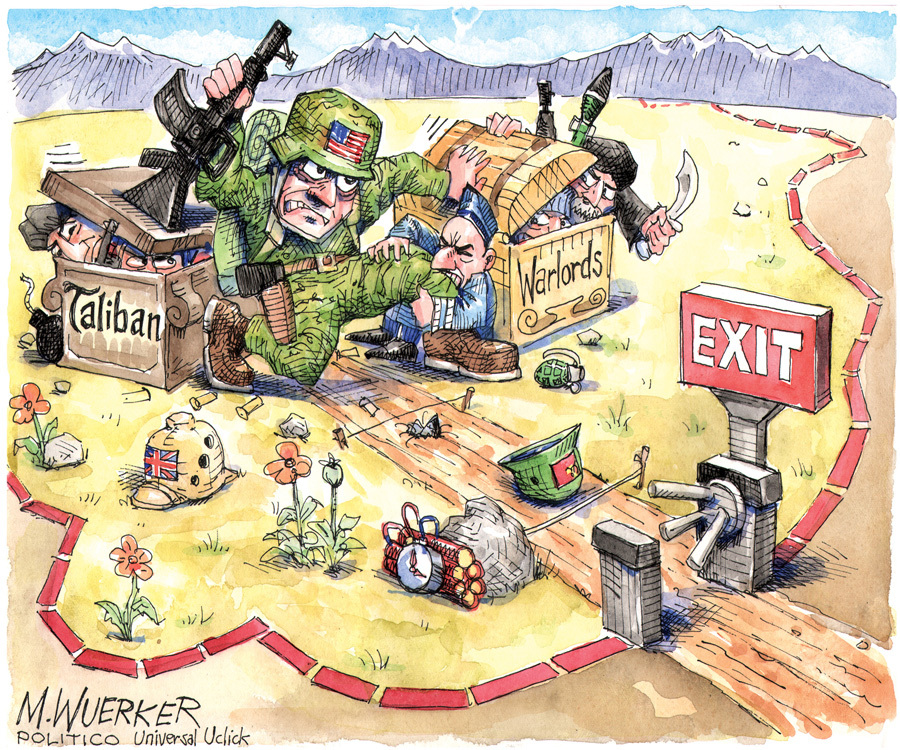
  • A rough road out of Afghanistan.
  • Economics graph of the week. Median income is the lowest it has been in a decade or more. So while corporate profits are at an all time high, and jobs are trickling back, it looks like those jobs don't pay very well. More on the same...

Saturday, March 23, 2013

Mammals, rising from the ashes

Yes, placental mammals diversified after the KT boundary

The asteroid hypothesis for dinosaur extinction hit the world of paleontology like a meteor, and has been a constant source of amazement, nitpicking, and doubt since. The fossil record is patchy, so even if dinosaurs really died out at the cretaceous/tertiary (K/T) boundary formed by this impact in the geological layers, not all species would have representatives neatly recovered right below the boundary, but not above. The record would present a more sporadic view of some dying out earlier, depending on their general abundance. But over time it has become increasingly certain that the impact was indeed cataclysmic, and while some groups of dinosaurs were in decline beforehand, most gave up the ghost right at the boundary.

Example of the K/T boundary, from Starkville New Mexico. One signature is a high level of the element iridium, common in asteroids. 

Likewise for their thankful successors- the mammals- there have been long-standing disputes about when the major classes originated, especially the diversified descendents of the placental mammals- whether most of them were already present as the dinosaurs strode the earth, and what they really gained from the asteroid impact.

A couple of years ago, a thorough molecular study placed the the divergence of placental mammals into its major lineages, like bats, whales, primates, herbivores, etc, well before the K/T impact boundary, at least 100 million years ago.

An older mammalian phylogeny made from molecular evidence. Note the K/T boundary marked by the shaded boundary at ~66 million years ago, which was recently honed to just a 100,000 year window- 66.043 ± 0.043 Ma. This tree has most major lineages splitting well prior to that boundary.

But recently a paper came out that used both classical anatomical/cladistic methods and molecular methods to revise the story back to what had been thought for quite a long time- that placental mammals split into their various modern subgroups only after, but relatively soon after, the K/T impact. Within five million years, as these authors have it. At this time, there was a vast explosion of lineages that led to all the modern types we know and love, and others that went extinct. In comparison, very few major lineages separated in the last forty million years.

Unfortunately, their phylogenetic tree diagram is such an overstuffed mess as to be unpresentable. But just scrunch the one above in the horizontal scale, and you pretty much get the idea, although both groups agree that the split between marsupial and placental mammals happened much farther back- about 180 million years ago. The divergence between the two views is remarkable, and comes from the interesting fact that the molecular "clock" doesn't tick very evenly.

Molecular phylogenetics uses comparisons of protein sequences. You can have your pick over a wide spectrum of sequences, from genes like immune system components that change very quickly, (in an evolutionary sense), to others like histones or ribosomes that change very slowly. So you have your choice of clocks ticking at different speeds. With modern sequencing technology, it is relatively easy to collect data for your selected proteins from many species, and crunch then computationally to align the sequences and judge their divergence.

It is very quantitative in a way, and thus attractive over the old ways of comparing the slow change of tooth shapes over a fossil series, or skull shapes, or ear bones, or ankle bone shapes, etc. But there is a catch- that the only sequences we have are modern, so we have an enormous and perilous estimate to make when we want to translate a sequence divergence into a divergence in actual biological history. (And this isn't the only catch- there are a blizzard of possible mathematical techniques and associated theories/models available for the basic alignment comparisons and other steps, which have taken a long time to shake out.)

These estimates are calibrated using divergence times of well-understood fossils that track reasonably well to species we are familiar with in sequence terms (say, sheep and horses). But this calibration becomes rapidly more hazy as we go back in time, combining the uncertainty of the winding sequence history since divergence with the uncertainty of the fossil record. So it is easiest to stick closer to home (i.e. recent evolutionary times) and project those "calibration" clock rates back to more ancient events mathematically.

However it is apparent that evolution is not a constant process, and that especially during periods of promiscuous evolutionary radiation, sequence variation (as reified in founded linages) may speed up, causing a molecular-only analysis to cast events substantially farther back in time than they really occurred. We also know that different lineages have different evolutionary rates at non-radiating times, making simple calibration rather perilous. The only way is to put more weight on studying the fossil record, which is what these current authors seem to have done.

Characters on the skull used by the authors to compare fossil mammals for lineage membership determination- just an example of the methods used to establish relatedness among real fossils, in contrast and comparison with molecular relationships.

This issue of the wayward molecular clock applies even more strongly to the advent of eukaryotes, estimates of which range from less than 1 to 2 billion years ago. The revolutionary nature of this transition can hardly be overemphasized, generating the enormous and enormously complex eukaryotic cell out of the symbiosis of two or more bacterial cells. Many new systems arose denovo (meiosis, nuclei, intermediate filaments, goli and endoplasmic reticulum). It also involved a long gestation in evolutionary obscurity, followed by an astonishing radiation to a multitude of forms most various, including all animals.

So evolution remains a story in progress, with a fair amount of its history still shrouded in misty uncertainty, and only gradually coming into focus as more data come in and are more carefully analyzed.

The green line is projected labor force, given population growth and proportion employed during good (more or less!) conditions prior to 2008. The blue line is actual labor force participation in real numbers. The gap stands at about 12 million people. What could 12 million people be doing for us?

Saturday, March 16, 2013

Invasion of the stone cold killers

How one virus docks and enters.

These are wonderful times in biology. Advances in technology make routine what was before extremely arduous or impossible. An example is the study of structures at atomic and near-atomic scales. The data bank of biological atomic structures- of proteins, mostly, but also of DNA and RNAs- has ~90,000 entries, including increasingly complicated and large structures.

Combining atomic structures (deduced from X-ray crystallography, typically) with more gross-level imaging by electron microscopy has become possible as well. A recent paper described the large-scale structure of a bacterial virus as it docks and then injects its payload of DNA. Quite reminiscent of a space landing craft, really!

Example images of viral docking, in three stages. Stage A, the virus is positioned on the surface. Stage B, it has inserted its syringe-like channel. Stage C, its head is empty, after all its DNA has entered the cell. Note that this is not to scale- these cells are not full-size E. coli, but mini-ized vesicles derived from them.

This paper clarified the first parts of this docking story, showing where the tail fibers are at different stages of infection, at reasonably high resolution. The method was a lot of electron microscopy at the highest possible resolution, of hundreds of viruses, which were then averaged together to form smoothed-out pictures of higher resolution that any single one alone.

Averaged image of T7 viruses, showing its tail, internal core, and tail fibers around the outside (C is the view from bottom). In A, a viral mutant was used that has no tail fibers.

This virus (the T7 bacteriophage, well-studied in molecular terms) first detects and binds to a bacterial cell (the usual lab specimen of E. coli) using its tail fibers, shown in yellow:

Schematic interpretation of the data, with tail fibers in tucked position, and the detailed structure of the end of the tail fiber, which binds specifically to bacterial surface LPS, superimposed at scale.

These yellow spokes are the landing gear, nicely tucked up against the body of the virus, which is a sort of ordered crystal of coat proteins enclosing a DNA cargo (of only 39937 nucleotides). One oddity is that, while there are six tail fibers, the body of the virus is an icosahedron with five-fold symmetry. So the fibers can't be very tightly bound to the body. The ends of these fibers seem free enough to bind their receptors whether tucked against the virus body or extended out. They bind a common and large molecule on the surface of bacteria like E. coli, called lipopolysaccharide, or LPS. This binding is very loose, however, so the virus can roll around a bit before settling down on its target.

Once a fiber binds, it flips out into an extended shape, and other fibers can then bind and flip out as well. When all six have bound, the virus is well-attached to the ill-fated bacterium, and is also properly positioned for the next step, which is the descent of the central (red) channel and injection of the viral DNA.

Data and schematics of T7 in the docked position, before and after tail insertion. OM is the bacterial outer membrane, IM is the bacterial inner membrane. PG is the peptidoglycan cell wall layer between the two membranes.

What happens next is a little more mysterious. The binding of the tail fibers to the bacterial surface- even all six- does not seem to signal the viral core to fire its payload. The central red tail does not seem to have a specific receptor that it binds to or recognizes either, as far as I can read. Rather, it seems to expose enzymes perhaps like lysozyme, that begin to degrade the bacterial surface. This results in a little indentation of the surface (see the image above). At some point, a large core complex of proteins inside the virus bodies is signalled to come out, forming a pore that spans both the outer and inner bacterial envelopes / membranes (parts C & D, above).

Author's interpretation of the docking and insertion sequence. The DNA enters quite slowly, actually, taking several minutes and happening in three stages, pulled successively by viral proteins/internal pressure, then the host RNA polymerase, and lastly the RNA polymerase encoded by T7 itself.

An interesting aspect of what happens next is that the viral DNA doesn't just shoot into to the bacterial cell. It carries sequences that would be susceptible to one of the bacteria's defense mechanisms- the so-called "restriction" enzymes that cut foreign DNA. So the virus feeds in just a little of its DNA, (850 nucleotides), protecting it with special proteins. That DNA holds three promoters, which attract the resident bacterial RNA polymerase, which through its action of transcription physically pulls more of the viral DNA into the cell. One of these genes is a specific inhibitor of bacterial restriction enzymes. Later on, after T7's own RNA polymerase is transcribed and synthesized, (and after many host proteins have been destroyed), it comes back to pull the rest of the viral DNA into the cell at a speedier rate. The whole cycle of infection can be done within half an hour.

A diabolical mechanism, to be sure. But viruses like this one are being considered as next-generation antibiotics, to take up the slack after our penicillin-related antibiotics wear out due to overuse and evolved resistance. So don't be surprised if you end up swallowing some of these viruses as medicine someday.


Saturday, March 9, 2013

Socialism with English characteristics

Can't we all live together?

I've been watching the first few episodes of Downton Abbey, and honestly, it reminds me of Glee, with its machine-gunned melodrama. One is left in a tizzy trying to follow it all. But one plot line in episode 4 was intriguing, where the head housekeeper Mrs. Hughes entertains a marriage proposal from an old flame, a widowed farmer from Scotland. She says no, with reluctance and some wistfulness for the freedoms he offered.

But she does live in a castle, after all- not a bad spot, even if one is downstairs in service. It made me think about the ecosystem the show portrays, vs the pioneer homesteading ethic we so commonly hold in the US, madly rushing into debt and overwork to stake our claim on a single-family home, proudly isolated from the rest of humanity.

The Edwardian estate was a communal living arrangement, with a large population cheek-by-jowl, all serving each other's needs. Washing was done, meals cooked, grounds kept, bills and employees paid. Very few communal living schemes have had such durability, certainly not more idealistic ones forsaking hierarchy in the name of communism or socialism.

The right/Republican end of the human temperament spectrum certainly has an important point to make in this respect, that hierarchy is an essential part of the human condition, putting the order into "the social order", putting each member in a place with a known role, from which they hopefully have a structured route for ascent depending on luck and talent, as evaluated by other members of the collective.

The conceptual revolutions of the enlightenment, and finally Marxism, began to see this hierarchy as intrinsically oppressive. As a matter of humanity, no person had the right to order others around, or to be fussed and dressed by a simpering valet- certainly not by birth. The capitalist and estate proprietor was seen not as the orchestrator of a complex community that provided roles and sustenance for all its members, but a parasite who skimmed off profits and labor-value from the powerless worker-bees who, if only they could shake off the chains of a socially programmed hierarchy, could earn their full value and enjoy a life of personal freedom.

But sometimes that life is less rich than one within the communal hive, however constricted. Even if the servants get only a fraction of the good food, and rudimentary dormitories, even if they experience the daily sting of inequality, they have other creature comforts and social comforts that might well make up for it. Some of our greatest literature has arisen out of the complex communities of the estate. (Though admittedly, rarely from downstairs.)

In our day, the corporation is perhaps the most dominant social community, leaving its members to a freely atomized personal life, even as it imposes hierarchy of a very traditional sort on their daily working lives. The recent dustup over Yahoo's renunciation of telecommuting touches on the heart of this power structure- how closely should the corporation dominate its slice of our lives?

Is this modern division of work and "life" the final solution, or will the future bring other modes of social organization? Work is a central human value, so even if we don't need to do anything- once robots take care of all our mundane needs- we will still live in hierarchies of some kind, and work to make each other's lives better, in some, hopefully higher, more artistic, more humane, way. Perhaps that is what Marcel Proust saw in his fin de siècle time, running from one Parisian Salon to the next, scrambling up the social ladder with no greater goal than to be loved.


  • Temperament, politics, and social order, continued...
  • Suicide bombings OK.. or not OK?
  • Afghanistan- the good news.
  • As markets go up, labor keeps getting screwed.
  • In Japan, finally the prospect of an exit to normality, via more spending.
  • We, too, need a fiscal kick in the pants.
  • Our libraries, our homeless shelters.
  • Economic quote of the week, from Friedrich Hayek, on equilibrium methods and assumptions in economics:
"The assumption of a perfect market then means nothing less than that all the members of the community, even if they are not supposed to be strictly omniscient, are at least supposed to know automatically all that is relevant for their decisions. It seems that that skeleton in our cupboard, the 'economic man', whom we have exorcised with prayer and fasting, has returned through the back door in the form of a quasi-omniscient individual.
The statement that, if people know everything, they are in equilibrium is true simply because that is how we define equilibrium."
...
"Clearly there is here a problem of the Division of Knowledge which is quite analogous to, and at least as important as, the problem of the division of labour. But while the latter has been one of the main subjects of investigation ever since the beginning of our science, the former has been as completely neglected, although it seems to me to be the really central problem of economics as a social science."

Saturday, March 2, 2013

What's next for Apple?

Robots.

With Apple being the most valuable company, more or less, one has to wonder how it can top its previous tricks. Bob Cringely asked this question, and got me thinking.

Honestly, it is hard to expect any growth at all. Given its already enormous size, the most likely path goes down, not up towards a future where Apple would become lord and master of the business world.

Nevertheless, what could be next? How can they top their megahits of iPod, iPhone, and iPad? They have made a science of striking a consumer category ripe for computer-i-zation with a fully-formed solution that transcends what others have imagined and melds design, computerization, and cloud services into all-too convenient ecosystems. As an example of bad timing, Apple first offered a tablet computer way back in 1993- the Newton. It was an amazing achievement, but far before its time. At which point Steve Jobs finally pulled the trigger a second time, and the iPad arrived.

What other area of our lives are ripe for this kind of treatment? Where have nascent computer-consumer interfaces been lurking, ready to inspire an Apple-style invasion and makeover?

I think it is robots. Admittedly, invading this area would be extremely ambitious, involving far more moving parts than Apple is used to dealing with. But the field seems to be in a perfect state. There is an active industrial sector with usable, worked-out technologies. There is a nascent consumer sector, in a few specialized niches- cleaning and telepresence robots (which are even based on the iPad). Autonomous cars seem to be imminent as well.

The potential is clearly very high. Just as desktop computers took over areas of our lives and previously separate jobs that no one imagined, (secretaries, music production, guitar hero, postal service, phone calling), so robots will doubtless work their way into innumerable areas of our lives, limited only by their intelligence and design.

For running a household, the electrical revolution has left a great deal undone. Compared to having a house full of servants, having a washing machine leaves quite a little to be desired. So does having a microwave, compared to having a cook. So does having a vacuum cleaner, compared to having a maid. Could robots bridge this gap between dumb machinery and true service?

It is going to be a very long road, but with real uses already here, it is the kind of market that may be ready for exploitation, and for unimaginable growth.

Could robots take over these tasks without also taking over and ruling the world? I think so, given that we design them. But in any case, it is a world we are headed towards, and Apple would be well-positioned to help design it.


  • Oh, robots do interpretive dance, too.
  • Is the thrill gone at Apple?
  • Henry Ford- another visionary / megalomaniac, building the future.
  • Telecommuting rocks.
  • Christian martyrs: a mess of legend.
  • Christian church- right or wrong, the tribe is most important.
  • IBM, Circa 1970's-80's. "Every IBM employee’s ambition is apparently to become a manager, and the company helps them out in this area by making management the company’s single biggest business." Also ... how the world ended up using the "quick and dirty operating system".
  • Why priests? ... indeed.
  • The sequester ... is what it's like being ruled by the stupid party.
  • Solow on debt. And some MMT corrections.
  • Economics graph of the week- sectoral balances in the US, since 1952. Note how the household sector was in a highly usual deficit since roughly 1998, up till the crisis.


Saturday, February 23, 2013

Riding into the dawn of history, with the Indo-Europeans

Review of David Anthony's "The horse, the wheel, and language."

The nineteenth century experienced a rush of excitement about the linguistic consanguinity among the Indo-European languages and thus the cultures of India, Iran, and Europe. The most exotic cultures were joined through an invisible history that was at last re-bridging their farthest-flung representatives through the English colonial project.

By the next century, this connection curdled into the Aryan theory of racial distinction from the semitic and other "races", buttressing with pseudoscience the already virulent antisemitism of Christian Europe.

Anthony's book brings the whole story up to date, covering vast grounds of archeology and linguistics that give us more information about the Indo-Europeans, resolving many of the big questions about them, principally where and when they originated.


The first thing to say is that whatever the Aryans were at the outset, they soon lost themselves (genetically speaking) in the vast bodies of humanity they collided with. Their dominance, based on the military advantages of horse-riding, chariot-fighting, and outstanding metalwork, gave their language a privileged status. But they practiced a client-patron form of rule, and accepted into their culture whoever conformed to the cult (best represented in the Rig Veda (~3500 ybp, or years before present), but also reflected strongly in the Roman culture), so by the time of the Nazis, there was no such thing as an Aryan.
"The Rig Veda (of India) and the Avesta (of Iran) agreed that the essence of their shared parental Indo-Iranian identity was linguistic and ritual, not racial. If a person sacrificed to the right gods in the right way using the correct forms of the traditional hyms and poems, that person was a Aryan. Otherwise, the individual was a Dasyu, again not a racial or ethnic label but a ritual and linguistic one- a person who interrupted the cycle of giving between gods and humans, and therefore a person who threatened cosmic order, r'ta (Rig Veda) or asa (Avesta)."

One of the most interesting observations from the linguistics is the inexorable change languages undergo. The English of only 1,000 years ago is unrecognizable to us. So not only can one make conclusions of common origin based on linguistic similarities, one can make negative conclusions from a lack of similarity and also rough timing conclusions about when branches split off from each other.

For instance, the Indo-European languages have a lot in common- many root terms and core concepts, like horses, gods, wheels, wool, carts, portable wealth, dogs, milk, and much else. They have such a strong core that they can not have diverged more than 5 or 6 thousand years ago. This core must have functioned as a coherent cultural language for a group that couldn't have occupied a terribly large territory originally, given the technologies of the time, or persisted for a very long time in that early state, yet which subsequently spread like wildfire to all corners of the western ancient world, and may have significatly influenced the rise of Chinese culture as well.

The linguistics point to some key innovations- the domestication of horses (estimated about 7000 ybp), horseback riding (~6200 ybp), the invention of the wheel (estimated at ~5700 ybp), and the use of wheels on light, one- or two-person war chariots (estimated at ~4000 ybp). There is also the adoption of long-haired (mutant) sheep for wool production, and entry into the bronze age proper, developing arsenic and tin alloys with copper into a regular industry. All these steps were evidently first taken in the Pontic steppes, the regions North of and around the Black and Caspian seas.

Why? Well, the first reason is that this is one of the few regions horses remained in the wild. People in this area had already domesticated pigs, goats, sheep, and cattle. But horses are another kettle of fish! All domestic horses trace their ancestry on the male side to a single male progenitor, indicating the difficulty of establishing a domestic herd. Horses were hunted commonly for food, one of those "pre-adaptations" one hears about so often in the evolutionary stories. So it would naturally be in this region as well that horses were first domesticated for food, then ridden for better managment, and lastly ridden and harnessed for many other purposes.

While Anthony's expertise generally leads to grievous over-writing on the archeological issues he is most familiar with, his work on bit wear is quite significant, finally figuring out how to tell whether horse remains show signs of riding, by way of the slight damage done by bits placed before the molars by horses chewing on them. This is how he roughly dates the advent of horse riding to about 6200 ybp in the Kazak to Caucasas area. One can only imagine how daunting the prospect of riding the first horse must have been, and how bizarre one's first sight of another human on horseback.

Anthony describes an interesting process where the productivity of the steppes was transformed by the horse and wheeled carts, from a wasteland where herders could visit only on brief forays from the river valleys, into a perpetually productive zone where they could nomadically herd as far afield as they pleased. A bit like how the iron plow transformed the farming (and destruction) of the steppe / prairies in later times. This economic change also introduced the possibility of vast accumulation (and vast differences) in wealth, stored on the hoof as livestock. Which then fostered a cultural transformation towards much more differentiated status hierarchy / patriarchy, where the rich were buried in very labor-intensive monuments.

It obviously also knitted together large regions not previously in contact, between these steppe areas and the more urban areas to their south, and across the steppes even over to China. Again, this is more than a little like the later rise of the Mongols, who ranged even more widely using the same technology of horse-based nomadism to make of Central Asia a highway of conquest and trade- the silk road. Anthony highlights a large amount of Russian archeology from the last forty years that has not been very accessible or appreciatedd to the West, and focuses particularly on one culture at the southern end of the Urals, the Sintashta, which seems to embody the ur-Indo-European culture.

Sintashta grave, with metalwork, horse remains, and chariot remains. At lower right are horse bit cheek pieces, whose knobs are believed to have been placed inward against the horse's lips, giving the driver/rider even more control with a very light touch.

These people (about ~4000 ybp) built compact, strongly palisaded encampments, filled with bronze workshops. They buried a small proportion of their population in kurgan graves, which were a steppe specialty of a large circular built-up mound with a central grave, often structurally supported with wooden bulwarks. These particular graves contained a good deal of bronze, and war chariots. Most interestingly, they contained horse-intensive sacrifices eerily similar to the central horse sacrifice ritual described in the Rig Veda, with heads and feet arranged artistically around an overturned pot. (The rest of the animals were served in the feast; unfortunately, I can not offer an image of such a grave that does it justice).
"Similarities between the ritual excavated at Sintashta and Arkaim and those described later in the Rig Veda have solved, for many, the problem of Indo-Iranian origins."

So there we have it, the origin in time and space of the Indo-Europeans, more or less. What they brought to the rest of the world, in addition to their language, continues to ring down the ages. Roman culture was a typical example. The patron-client system was honed to perfection in Rome, making of the paterfamilias practically a god, to be revived periodically via the public parade of his death mask. Women were of vanishingly little account, on the other hand. This culture was starkly patriachial. When the Romans invaded Britain, they were astonished to see war chariots being driven about- something the Romans had only heard about in the Greek epics of a by-gone age, despite their own carefully tended "sporting" rituals of chariot racing and other manly feats of brutality and human sacrifice.

In our own day, we remain inheritors of many of these traditions, struggling still to overcome patriarchalism, colonialist tendencies, a large cast of sky-gods, and our love of speedy chariots. Perhaps our love of technological innovation will start to solve some of these problems, rather than feeding greed and powerlust as it has so often in the past.

Wotan takes leave of Brunhilde, Konrad Dielitz, 1892.

  • A contrary view of the origins. The Anatolian branch is accepted by both sides as particularly early, but whether it was the immediate precursor to most of the rest of the Indo-European family is in question.
  • Excel and the London Whale.
  • Martin Wolf gets MMT religion.
  • "The Economist"- another right wing rag.
  • What's so bad about corruption?
  • Chromium- another study in corruption.
  • The triple pane way to climate control.
  • The postal way to simple banking.
  • "As the door revolves" ...
  • Gay blackmail in the Vatican? I wouldn't want to be pope either.
  • No wonder we watch Downton Abbey- we are now a class-ridden, immobile society.
  • Economic quote of the week:
"... high unemployment we know depresses wage growth throughout the wage scale, but more so for the bottom than the middle and the middle than the top."