Saturday, September 8, 2012

Tribe and country: Mitt's frame for America

The one hive or the many in existential competition- how do we want to live?

I listened with fascination to several speeches of the Republican convention. It is remarkable, really, in this age of video, facebook, powerpoint, writing, printing, and many other so-called revolutions in communication that the speech remains the coin of our political realm, just as it was in ancient times and beyond (with apologies to the political attack ad, surely an up-and-coming form of political communication). Even when every single word out of a politician's mouth is a lie, speech at length remains the unparalleled window into the person, a connection desired by both the speaker and the listener.

In the lengthy runup to Mitt Romney's speech, an elderly couple from his congregation (stake) spoke about how kind and thoughtful Mitt was as their pastor when their eleven-year old son was hospitalized, and then died, of cancer. Among much else, they mentioned that their son wished to be buried in his Boy Scout uniform. This got me thinking about the role of groups in Mormon life, and in America.

Romney himself, while gauzy with platitudes, offered a program of reducing the federal government while somehow supporting small businesses, reducing the deficit, cutting lots of taxes, and creating twelve million jobs. For all the opportunism, flip-flopping, lying, and numbers that don't add up, I think he is honest about his views about the federal role. He was characteristically stingy with praise for the government he seeks to lead, mentioning Neil Armstrong, the Statue of Liberty, and the raid on Osama bin Laden. On the other hand, he and everyone else at the convention focused ceaselessly on small business, family and faith:
"The strength and power and goodness of America has always been based on the strength and power and goodness of our communities, our families, and our faiths."
Sure, it is the purest distillation of platitude, but there is something more- a vision of what groups count in America and how they should relate. On the one hand, there is Romney's experience in a minority faith and in a ruthlessly competitive business environment. And on the other, there is the technocratic approach of Federal and other levels of government to create public goods and restrict internal competition on a rational, conscious basis, partly out of moral fairness, partly to reduce violent and other unnecessary conflict, but also partly to increase the overall efficiency of our business and other communities.

As a missionary in France, he participated personally in the great Darwinian struggle that is religion in America- to show one's faith, serve one's faith, and grow one's faith, planting flags all over the world. His service to his bereaved parishioners was one of countless expressions of his dedication to his faith and to no other. The couple's son imbibed this love of the group like mother's milk; the Mormons use scouting assiduously to train their young in this regard.

Likewise, in business, Romney participated in brutal tribal struggles, first to manage and advise businesses for competitive growth, and later to identify targets for asset-stripping and debt loading. He has not shied from winning through hostile maneuvers, destroying companies, buying off managements against shareholder interests, convincing banks to give unsustainable loans, environmental pollution, and many other methods that in any larger perspective would be counted as "sins". But in the service of his group and himself, much leeway is allowed.

The picture one gets is of a man dedicated to group competition in the rawest way. I am not such a group-oriented person, so I find this all a bit hard to understand. But Romney's frame seems to be of a light federal government presiding over a ruthlessly competitive landscape, and may the cleverest and hardest businessman win, may the most hive-like religion win, and may the devil take the hindmost. If one does not have a functional group allegiance, his prescription would be to get one. In his experience, the Mormons have a full social service system, and would probably have their own sharia-like legal system, were that possible. He already pays taxes/tithes to his religion/hive, so one can understand why paying another set of taxes to provide frequently similiar social services to others outside his faith would stick in his craw.

He sees the sub-groups and tribes in America as the proper frame of competition and ultimate improvement. Out of the crucible of inter-group competition comes success, and the Republicans worship nothing like competitive success. The convention featured successful people, real or imagined, who harped again and again on the need to not punish success, and reveled in their financial and reproductive success. Their main slogan petulantly and ceaselessly repeated their conviction that they and they alone had built their own successes.. no help needed from no educational system, public services, legal apparatus, federales, or the like.

Indeed, the ticket's tax proposals clearly relieve the successful of yet more taxes, making the unsuccessful pay instead. This would truly be karmic justice- an Indian caste-style system of rewarding and entrenching what looks from the outside like privilege and guanxi rather than broader concepts of fairness, a national community, or even a smoothly functioning or broadly prosperous macro-economy.

Sure, Romney has some uses for the federal government, especially in the no-holds-barred inter-group competition that is international affairs. Looking outward, the military serves the interests of our national group, even while the tree-huggers and one-worlders seek rationality and unification on that level as well. No, America is exceptional, will brook no limits to our power, and will rule the world right up until China pries the last M16 from our cold, dead, hands. Competitive in/out group tribalism informs the Republican perspective at all scales.

What follows from all this is that any regulation or redistribution that is rationally conceived on the governmental level, especially the federal level, to redress wrongs, to equalize opportunities, or soften the blows of fate, are fundamentally anathema to the Darwinian war within America among its many competing sub-groups. However glaring the need or clear the benefits from a public good, or however arbitrary and clearly remediable the workings of fate, Republicans- and Romney foremost among them- are deeply uncomfortable with any impairment of their ability to win- by fair means, or more significantly, by foul. A true competitor seeks any and all advantages, and doesn't whine about rules, fairness, or morals.

His conduct of the campaign is emblematic, changing positions with gymnastic precision, and lying through his teeth. His attitude is.. of course I am lying.. I'm trying to win an election, right? We're all adults here, and you know as well as I that I am lying. Just so long as you don't tell anyone, because as you know, I am a highly successful and socially dominant person, so my lies are OK.

It is evident that Romeny sees nothing wrong with paying a mere 13% of his income in taxes, even though each year he makes far more than he will ever need. Indeed, he has gone to heroic lengths to cheat the government out of every possible cent. And in Ryan's budget proposals which Romney applauds, he will be paying less than 1% in taxes. It is evident that Romney sees nothing wrong with screwing workers out of their benefits and jobs, as long as his company/hive wins. He can build companies and add jobs if that is what it takes to win, but if not, then that is what his competitive position demands. Nothing personal, it's only business. It is evident that Romney sees nothing wrong with voucherizing medicare and medicaid, along with cutting what remains of the social safety net, (similarly, Republicans seek weakened civil rights protections, environmental protections, and campaign finance rules), so that the groups he is part of can have a freer hand in the grand competition of making it in America.

I get it, of course. I've read Hayek. Competition is an irreplaceable tool in micro-economics and most other pursuits. Competition is a large part of how humanity got to where it is today, and how we operate. I watched the Olympics. But competition is not the whole story, either operationally in how best to run an economy from the macro perspective, historically in explaining how humanity evolved, nor morally in deciding what kind of society we want to live in. Even in efficiency terms, excess competition can be intensely negative, as shown by global financial crisis, our handsome dividend from freeing the financial industry from oversight in favor the free-form screw-anyone-you-can competition of which Mitt Romney is such a champion.

Who does the truly great things in our nation? Who does the pure research, the interstate highway building, the space exploration, the education, the civil rights enforcement, and the park preservation? Towards the end of his speech, Romney cited Steve Jobs as an iconic business innovator. Jobs would turn in his grave, but more significantly, his success was rather different from Romney's example. He cared about the product and the customer's experience more than the money. He was an artist after a sort. A hippie at heart. His success was built on countless public investments and non-competitive facets of our society, all the way from the transistor (enabled by ATT's monopoly position and essentially academic research arm), to the internet and public education. And Apple barely survived the monopolistic jihad of Microsoft, which but for the government's antitrust intervention would have snuffed Apple out completely.

What is the balance we want? We can see the stark costs of all-out intergroup competition through history and all over the world. Especially in the Middle East, Afghanistan, and the Balkans. Societies that let inter-group competition get out of control tear themselves apart into smaller societies. Societies that let successful groups win to impose continuing inequalities and exempt themselves from common duties become feudal / caste-ridden. On the other hand, societies that suppress competition excessively, like the Soviets, tend to find it emerging on other planes, like the political. We surely need some, but we need it carefully channeled, regulated, and limited. Along these lines, the Olympics are a model of highly, even painstakingly, managed competition.

I come from a Star Trek mindset where ever-greater collections of societies (the Federation of Planets!) would gather together in peaceful and beneficial coexistence, facing existential (and dramatic) threats arriving only from outside. Here on Earth, we have serious planet-wide business to attend to, what with destroying the biosphere and all. The Republican program is understandable from a primitive psychological mindset, but would take us backward by a century, if not several.

  • A nation of "takers"?
  • Class war, ad infinitum ad obliviosum.
  • Willful screw-the-poor and everyone else policy, British edition.
  • Where is the war on poverty now?
  • Whatever happened to unions?
  • Oh, this is what happened to unions.. complete victory by money/business in politics, including total corruption of one party and partial corruption of the other.
  • Obamacare rocks.
  • Energy independence is a chimera... real security means using less oil.
  • Geology and religion.. how much does one "owe" the other?
  • Religion continues to yield dividends in terror.
  • The Taliban is still there, still losing the battles and winning the war. There continues to be a fatal political, legitimacy, and power vacuum at the center- in Kabul.
  • We really need fiscal policy.
  • Political image of the week, from the super pack.

Saturday, September 1, 2012

Thank god for rots!

Fungal brown and white rot species evolved in time to prevent terminal carbon burial.

Take your mind back- way back- to the carboniferous epoch. A luxurious 60 million years of high temperatures, high CO2, and high growth and burial of trees and other plant life to form the coal deposits for which it is named. Amphibians were the dominant animal, and trees the dominant plant life, having evolved bark and woody cores with the critical component lignin, a heavily crosslinked carbohydrate polymer that is incredibly tough. We certainly can't eat it, and nor can other animals.

Life was great for the trees. They had come up with a great solution to competing with their fellow plants for height and light. But it was a little too good. The carbon they sequestered into their dead hulks was impervious to decay, to the point that it was left to get buried with the ongoing geological processes, as coal. The carboniferous thus experienced a dramatic drop of atmospheric CO2, from the high levels inherited from the foregoing eras of lower plant productivity / higher recycling, never to be seen again, to some of the lowest on record towards its end, until the recent ice ages.

Geological time scale, with very rough graphs of inferred CO2 (purple) and temperature (blue). Note the dramatic drop of CO2 through the carboniferous, and its subsequent return to higher levels. Then eventually  its descends to very low levels through the recent ice ages, followed by the anthropogenic blip at the end.

Then came the rots- brown rots, which partially degrade lignin, and white rots, which chew it up completely. A recent paper describes how the earliest fossils of white rot are from ~260 million years ago, well after the close of the carboniferous (363 to 290 MYA). The researchers decided to sequence genes from a bunch of fungal rot species to determine from their molecular relationships when the true origin of this group took place. Their results indicate an origin of lignin-digesting enzymes in these fungi about 295 million years ago, consistent with a slowdown of carbon burial and the geologic resumption of net CO2 emission into the atmosphere.

How did they do that? Lignin is a heterogeneously crosslinked polymer of several short aromatic alcohols. This means that it is structurally very tough, and chemically a mess. There is no single point of attack by the usual clever catalytic enzymes that bacteria have been so successful in developing. Rather, a more blunderbuss approach is used, in the form of custom, secreted peroxidases, which harness the oxidizing power of H2O2 to blow away the lignin chemical bonds. The problem is that, if the fungus takes a too-aggressive approach to degrading the lignin, there may not be anything left to eat. Its food will have turned to ashes, (i.e. CO2), rather than a nicely slow-cooked meal of carbohydrates. Unfortunately, the details of how this is all managed are not yet known, though it is of some interest to the biofuels industry.

What is known now, through this paper, is when these key lignin peroxidases evolved, and how they diversified (to a maximum of 26 copies in one existing species of white rot. The rather complex  tree of descent is shown below, with a rough time scale at the bottom, and the key development and diversification of these lignin peroxidases (dark blue line shades). They point to node "A" as the common origin of all the current white and brown rot species, and show the copy numbers of the relevant enzymes in red throughout the tree.

Phylogenetic tree of many fungal species, focussing (top) on brown and white rot species that digest wood. 

Now, if only we could globally shut off these enzymes for a few hundred years to help us clean up the atmosphere!


  • Taibi on Mitt: pluto-hypocrite, financial mobster. Purveyor of a truly destructive form of debt. "But what most voters don't know is the way Mitt Romney actually made his fortune: by borrowing vast sums of money that other people were forced to pay back."
  • Republican unworthiness, continued. How would Romney like it if Obama started making magic underwear jokes?
  • Unworthiness, continued: A ticket of lies. I guess, if your plan is to reduce your own tax rate to 0.8%, you have to say something other than that.
  • Speaking of which, what the heck is up with Dinesh D’Souza?
  • Mitt's solution to a lack of jobs: "Or when you lost that job that paid $22.50 an hour, with benefits, you took two jobs at $9 an hour." This is a little hard to fathom, if a) Mitt was the one that screwed you out of that first job, and b) there are five applicants for every job opening.
  • Death of privacy, facebook-style.
  • Religion and spirituality keeps yielding dividends in violence.
  • Hell is not just other people, it is for other people.
  • Ideology and the creation of suffering.
  • 12-step cults.
  • Interesting proposal for stock market quantization.
  • Yes, the civil war was all about slavery.
  • Economics quote of the week, from Mark Thoma:
"When all of the misleading arguments are set aside, Romney’s economic proposal comes down to a simple tradeoff, less social insurance and other government programs for the working class, perhaps higher taxes as well, and more tax cuts for the wealthy. Perhaps that’s a tradeoff America wants to make, perhaps not – I suspect not."
  • Economics image of the week: Corporate profits (and income of the rich) are higher than ever. If they saw demand, they could invest plenty in growth & hiring. But they are saving instead.


Saturday, August 25, 2012

The watershed of wealth

Savings and the post-capitalist economy.

Consider a thought experiment: the Federal Reserve gives every citizen a million dollars, on condition that they don't spend it. Indeed, it could just as well be a trillion dollars. What would inflation be? What effect would it have on employment? However much wealth we sit on in this way, it would not cause inflation or stimulate the economy, or do much of anything else. It is spending that creates all the other economic effects, not wealth.

This is sort of what the Fed has been doing in the banking system by its provision of extra reserves. They may not have stipulated a no-spending condition, but the banks take care of that on their own by their lack of enthusiasm for lending. And once their animal spirits revive, the Fed will want to reel those reserves right back in.

The exercise also reflects on the larger balance of savings and spending in the economy. Employment depends on the flow of ongoing spending. But spending is dependent on individual decisions that divert income to either savings or consumption. If the amount going into the savings pool increases, spending declines and employment follows, even though nothing in the real economy has changed- people have not become less (or more) productive, and collective wealth has actually increased. So why should the employed suffer for a temporary decline in demand, when the savings suggest that this demand will rematerialize again at some future date?

In a way, we seem to be turning into Japan. Japanese citizens have been champion savers, buying prodigious amounts of their government bonds, while economic demand keeps faltering into deflationary territory. Their demography is just topping out with an aged bulge, who rely on savings to see them through an extraordinarily long life span. They have twice the level of government debt that we have, yet seem to be doing just fine, certainly not suffering from any inflation problems or solvency problems.

The issue is an enduring mismatch between capital needs and savings needs. The latter have now far, far outstripped the former, so returns on savings/invesments are practically zero. We are, in some respects, in a post-capitalist age. An age where there is far more money and wealth sloshing around the system than anyone needs to produce new factories and make other capitalist investments. New economic activities are concentrated in service industries and highly leveraged information technology- not areas where a great deal of capital is needed. The primary need is for savings, (or in the current environment, debt reduction, which is equivalent), since we are collectively (via the baby boom and the decline of exponential human reproduction) heading into new demographic territory where the aged generation isn't the light burden that they were in the past.

A solution (this is classic Keynes, of course) is to accept that the government is well-positioned to make up the difference in economic demand while all these savings are piling up, providing bonds that are not capitalistically productive, but are safe and contribute to the common good through other means like keeping people employed, providing health care, building the internet, educating more nurses, keeping the currency value stable, and the like.

An example that comes to mind is Mitt Romney. What is he doing with his vast savings? Is he creating jobs and trickling down? Is he taking risks? I don't think so (other than what he is spending on his campaign, of course!). There are the dressage horses, and a few homes in far-flung places, but mainly there are a lot of investments- very passive investments in liquid markets of stocks and bonds. Stocks provide liquidity and valuation to the "owners" of corporations, but they don't really create jobs. Very little stock valuation translates into corporate growth. What is Facebook doing with its stock bonanza, or Apple? Virtually nothing. Stock values translate into paper wealth, like real estate prices likewise, without creating spending.

So how much wealth does it take before someone actually starts spending it, creating jobs and trickling down? That is a key question. In my opening thought, a condition of no-spending was instituted. Perhaps that was unrealistic, but the rich are rich because they hang on to their money. Romney doesn't spend all his wealth creating homeless shelters, centers for world peace, institutions of higher learning, or bright new startup companies. In fact, he squeezes every nickle, leaping through hoops of incredible difficulty to deny as much as possible to the government in the form of taxes, and preserving as much as possible for his offspring who did nothing to earn it, so that his wealth is not spent, virtually in perpetuity. At best, it is invested in the passive vehicles mentioned above, whose return is destined to decline as our capital needs diminish.

More broadly, while personal savings rates in the US are not so great, overall wealth accumulation continues apace, after the vertiginous drop at the beginning of the GFC (global financial crisis). Much is thanks to the federal government pumping out enormous quantities of bonds to (mostly corporate and bank) savers and concomitant spending to actual workers and the economy at large, some of which returns again as bond purchases.

We have to reconceptualize the flow of GDP and economic transactions as a small aspect of the whole economic picture, a river within a much larger watershed of savings, debt, and wealth levels, easily flooding or drying up from changes in sentiments- about saving, consumption, real estate values, and much else. If we don't mind hunkering down with our stockpiles of ammo and emergency rations, we could get by, perhaps, but I think we rightfully have higher expectations of this river's consistency, especially when it comes to unemployment, which is individually and socially so devastating.

Of course this leads to questions of how high the flow should be. Organic demand may be fickle and destructive in its cycles, but it is also difficult to manage artificial levels of demand, to know or predict where they should be set. This is a big economic field, balancing inflation with unemployment, and weighing the demand impacts of taxes vs spending, and of spending on public goods versus transfers to needy recipients. But it isn't hard to figure out when we are in a crisis like today that we are not at the optimal level.

And optimizing this river's flow, especially during downturns, requires one of two policies from the government's perspective- either liberating existing wealth from its static, inert condition, or issuing new wealth by way of new government spending (and bonds, if it wishes to offer them). Conservatives should be wary of their knee-jerk calls for reductions in government spending and borrowing, since the alternative is sharper taxation and expropriation. The 99% may be fooled for a while by scare-mongering about deficits, but will ultimately revolt from the clutches of rising economic injustice so baldly mapped out by the Republican party.

This is, then, a trickle-down theory of sorts, but one which involves active management of the watershed for consistency of the ultimate flows, rather than a faith-based coddling of the rich, (under which I include the reduction Romney's own taxes under the Ryan/Romney plan from his current scandalous 13% to an outrageous 0.8%), who rarely display the entrepreneurial spirit they preach so reverently, or the community-minded benevolence which would be another route to a real, broadly effective form of wealth management.


  • The wealth & power view from the National Review- comical, if it weren't so appalling.
  • The corrupt are trying to rewrite the history of their corruption.
  • QE and trickle-down.
  • Pollution from gas drilling- what would Ayn Rand do?
  • Dirty energy hearts Mitt. 
  • Another example of a gene wearing more than one hat.
  • Russian style neo-fascism and Pussy Riot. I particularly liked how the church called for "mercy" only after the show-trial and sentencing. Very classy!
  • The incredible powerlust of Islam and its jihadis continues, now in Mali. Evil in its most concentrated form.
  • Republican convention may have to face up to that global warming hoax after all.
  • Economics quote of the week, from Bill Mitchell:
"Charles Killingsworth was a strong advocate of public employment (PSE) programs to relieve unemployment and provide a better life for everyone. In his speech he said that “a ten billion dollar public service employment program … can increase gross national product at least as much as a ten billion dollar tax cut. That is elementary macro-econmics.”
In fact, it would increase GDP by considerably more because some of the tax cut will be lost to saving and it is highly likely the marginal propensity to consume of those given wages in the program would be higher than the national average."

Saturday, August 18, 2012

Humans are a mess

We are full of significant mutations... maybe the GOP has an answer.

Two recent papers describe the partial sequencing of thousands of human genomes. What did they find? We are a mess, full of genetic variations (i.e. mutations). Far more variations than a typical population of our size. Their conclusion is that the explosive population growth we have experienced over the last ~ 5,000 years has allowed the accumulation of a large excess of deleterious mutations, compared to the more stringent selection that would have happened if our numbers had stayed more constant.

The population history of humanity is that Africans have the most diversity, Africa being the origin and home of our species. Various migrations out of Africa, to Europe, Asia, and Australia, happened in small groups; small sub-sets of the genetic pool available in Africa, thus constituting bottleneck events that reset genetic diversity in those new regions to low levels.

These papers continue a story that has been developing since the first human genome was sequenced in 2000: the hunt for human genetic variation, which accounts for much of the diversity of the human body and mind, in sickness and in health. At first, researchers set up huge projects to find common variants and link them to common diseases. The idea was that perhaps there was a "gene for" heart disease, and "gene for" cancer, and the like, and that a few common variants in those key genes would explain most disease susceptibility. We could make up a few diagnostic kits, predict everyone's future, and voila- molecular medicine would arrive.

Well, needless to say it was a bit more complicated and they were making a false virtue of the limitation of primitive sequencing technology. As mentioned previously, elementary evolutionary theory would have told them that common variants are common because they don't have strongly deleterious effects- they can not be responsible for a significant disease burden, because if so they would be selected out of the population.

Now we are to the point that thousands of genomes can be substantially sequenced without too much trouble, and these papers discuss the rates and nature of the rarer variants that come out of that analysis. Variants that can have much stronger effects on disease. In the limit case, an embryo gets a fatal mutation that prevents it from being born at all. Next up would be a less-than-fatal birth defect that may not prevent life, but does prevent reproduction. These kinds of variants never propagate in the population at all. They arise and die immediately, and are thus vanishingly rare.

So there is a sliding scale of mutations, from harmless ones that propagate by random drift in the population, not being subject to any selection pressure, to deleterious ones that get selected out (by "purifying" selection) at a rate directly related to how bad they are (their effect on "fitness").

The current projects tried to estimate the harmfulness of their observed variants in two ways. One was by comparing synonymous and non-synonymous mutations in protein-coding genes. The universal genetic code has 64 three-letter codes for 20 amino acids, so some of the codes are interchangeable, i.e. synonymous. Thus some mutations in a protein-encoding gene have no effect, and comparing those to the ones that do change the resulting protein gives a measure of the strength of selection in that area of the genome, and on those variants.

The first paper is titled: "An Abundance of Rare Functional Variants in 202 Drug Target Genes Sequenced in 14,002 People". They find a direct relation between the frequency of a variant in the population and its likelihood of being synonymous, which is to say that it would have very low or no effect on the organism.

The frequency of variants in the samples genomes (x-axis; singleton means it happens once in the whole data set, doubleton twice, etc., MAF = mutant allele frequency) relates inversely to their likelihood of encoding a change in a protein (non-synonymous; NS), vs a synonymous change (S) (y-axis).

But.. both groups mention that that the rate of rare and damaging mutations is unexpectedly high in the human populations they sample, traceable to the recent phase of exponential growth with relatively weak purifying selection.
"On average, individuals possess between 318 and 580 predicted functional protein-coding SNVs [single nucleotide variants] depending on how functional variants are defined."
...
"In particular, the vast majority of protein-coding variation is evolutionarily recent, rare, and enriched for deleterious alleles."
- quotes from the second paper, entitled "Evolution and functional impact of rare coding variation from deep sequencing of human exomes." Here, "deep" means they sequenced a lot of samples, and "exome" means they only sequenced coding part of genes, not promoters, introns, other control regions, or other junk of the larger genome.
The second paper performs a more complicated estimate of which variants might have real effects on the organism, affecting coding areas with known function, conserved domains, etc. They provide their counts in an elegant "fiddle" plot:
Plot of the frequency of mutations in putatively functional positions. European-American genomes (EA) and African-American genomes (AA), under more (dark) or less (light color) conservative models of what constitutes a functional mutation, using definitions that extend beyond simple synonymous/non-synonymous coding to take into account the known function and centrality of the affected protein and site, and other factors.

This in a genome of only ~25,000 genes. So we are perpetually skating on thin ice, accumulating deleterious mutations across the population that maybe don't get discarded so rapidly under the less-than-stringent conditions that we have experienced over the last few thousand years.

What to do? Our heroic desire to save every premature infant and fix every birth defect shouldn't blind us to the virtues of the selective process over the long haul. On the other hand, diversity is the seed bed not only of cultural vibrance, but also of evolutionary success. That is why scientists have adopted the more neutral term "variation" vs the pejorative "mutation". Just because a variant is in the majority doesn't always make it better.

In times past, there were often very severe selective conditions on human populations (however deficient in the view of these studies!). The battle against nature was far more dire. Disease killed most children, and eventually most adults. Injury or accident didn't mean a trip to the friendly orthopedic surgeon, it meant privation and often starvation. On the positive side, social success in group politics tended to lead to reproductive success, most flagrantly shown by the vast harems kept by the kings of yore. Genghis Khan is thought to have spread his Y chromosome to 8% of the men of Asia.

More recently on the political scene, we have switched from royal hereditary leadership, with its seat-of-the-pants theory of genetics and hereditary merit, to a more or less wide-open functional meritocracy. But critically, it is one where converting one's social success into reproductive success is frowned upon, to say the least. Our fixation on the peccadillos of politicians goes very much against (their) nature.

However, the fact is that a great deal of purifying natural selection in humans still takes place, and most of it happens before birth, in failed conceptions, failed embryos, and stillbirths. This is where unfortunate combinations of all those mutations that these researchers have uncovered are discarded, like bad hands dealt in a card game. This is where sexual reproduction shows its power, as a way to re-deal out genetic hands every generation, allowing some to win, and others to fold, discarding deleterious genetic variants where they become fortuitously concentrated.

So the idea that some eugenic program of Spartan inspection and destruction of newborns is going to do much for our genomes or posterity is fundamentally flawed. But the question of mental capabilities- that is a much more delicate and significant one. Intelligence and other characteristics like temperament, emotional warmth, social skill, artistic ability, even religiosity, are heritable to some degree (though hardly enough to make hereditary nobility a reliable proposition!). These characteristics only become apparent later in life, and have through human history been under much stronger positive selection than they seem to be today.

The main force is probably mate selection- who wants to marry a dolt? Reproduction has generally been the reward of good behavior, and other forms of maturity and success. Now such selection is substantially weaker, as we have outlawed polygamy and frown on other linkages of personal and reproductive success, in an effort to become a more equitable and fair society (fair among men, at any rate). Success is less genetically rewarding. Perhaps that is why the monetary rewards of success have come to be fought over with such unthinking abandon- as a faded remnant of what real success would look like.

That is where I would guess the GOP is going with its Ayn Rand, class warfare campaign. The morality of rewarding the rich and throwing the poor and unsuccessful overboard is that fundamentally, money equates with moral goodness and just deserts. It is a Darwinian proposition where success should be rewarded and lack of success punished. Even if that success was fed by a silver spoon or based on a century of attachment to the government teat, as in the case of the Ryan family. Even if the culture of the moment links the most psychopathic behavior and values to financial success. Wealth is what we worship and should worship, as the premier metric of human value.

The idea that the US might fail to reward the rich enough to run the country in every political, economic, and social sense seems deeply disturbing to the Republican party. But there is more to it. There is a racist element in addition to the classist one; a feeling of entitlement, despite all the lip-service to "equal opportunity". A strong dedication to keeping opportunity firmly in its traditional bounds. The refrain of the country "being lost" and needing to be "regained" is clearly of this sort. Romney's recent bizarre attacks on Obama for inappropriate kindness to welfare recipients fall into this category as well- substantively groundless, but strident dog-whistles with racial meaning. In short, the Darwinian proposition extends to reproduction, that America should remain white, pure, Christian (in the white sense, which now tolerates Catholics, even Mormons, with some grumbling!). It is a population genetic proposition, as well as a political one.

While it is obvious that some degree of meritocracy and reward for success is essential to run a society that is collectively successful in its pursuits, the question is whether we need to go back to a nature-red-in-tooth-and-claw sort of world either to run a working society, or to insure the flourishing of human genes into the future. And there is always the question of what constitutes human merit, in the most ultimate sense.

A recent radiolab podcast marveled at how radiation-resistant humans are, focusing on one Japanese man who survived close calls with both nuclear bomb blasts in world war II, yet went on to have more or less normal children. Wider studies of Japanese survivors and others exposed to radiation have reached similar conclusions. As I mentioned above, most selection takes place before we can even see what is going on- in utero. So the radiation dose is just added to the pile of the many mutations we have anyhow, the bad combinations are discarded, and the better combinations go on to live and reproduce.

So I think we will be OK. The exponential population growth of humanity is over in any case, though whether we enter an apocalyptic population crash due to resource and biosphere constraints remains to be seen. We don't need a politics/economics of fake success and unjust rewards to forge a better future. We need to nurture human diversity and cultural richness where many forms of success are valued- are employed, paid, and supported by our collective prosperity. The leading symbol of Mormonism is, after all, the beehive, not the private equity fund.

  • Christian Kansas, becoming "Brownbackistan". But do the Kochs care about abortion? Probably not. They care about crazy.
  • Books about natural selection and cooperation.
  • What has happened to common purpose?
  • Robots on Mars have message for humanity: government works.
  • Romney- pot calling the kettle black department.
  • Paul Ryan's selective concern about federal power.
  • The real record at Bain.
  • Unemployed continue to get the shaft.
  • The worthiness of Obama, and the unworthiness of Republicans, continued..
  • Sarah Vaughan, misting up.
  • Economic quote of the week, from Simon Jenkins via Bill Mitchell:
"British economic policy is like the Olympic Park without the athletes. It is barren of activity and incident. More than £325bn has been “injected into the economy” by the Bank of England, money that has gone nowhere near the economy. It is sitting in a bank vault. My Olympics legacy would be to get it out and inject it properly. With the economy deep in a liquidity trap, it needs an inventive genius like Boyle, who can blow £60m in just three hours of happiness. As Bob Geldof would have said, had he been invited, “just spend the effing money”."
  • Bonus political image of the week:

Saturday, August 11, 2012

Death- beginning or end?

What are we to make of the near death experience? A review of "Evidence of the afterlife" by Dr. Jeffrey Long.

Apparently, it feels wonderful to die. Everyone has by now heard about near death experiences (NDEs), which comprise floating out-of-body experiences, approach to a white light or tunnel, a highlight reel of one's life, communing with others who are dead, and positive feelings all around. This book is built around a large compendium of first-person reports of such NDEs, and, as the title indicates, comes to a definitive conclusion about what they mean for one of the most durable hopes of humanity- the afterlife.

The book is build from a web site the author set up to solicit NDE reports from around the world. He has compiled over 1,000 reports, using a structured survey form, and has personally interviewed over 600 respondents.

The first thing to say is that these observations all seem true. These people are not lying, and accurately report what they experience. The experience is not only curious, and very positive, but also personally powerful, altering their view of life and death, and their personalities. They are often making reports many years after the fact, recalling phenomenally durable and affecting memories. Just that alone is amazing to hear about, and even to the most inveterate skeptic makes the whole process of death a bit less daunting.

One example with many of the typical elements:
I found myself floating up toward the ceiling. I could see everyone around the bed very plainly , even my own body. I thought how odd it was that they were upset about my body. I was fine and I wanted them to know that, but there seemed to be no way to let them know. It was as though there were a veil or a screen between me and the others in the room. 
I became aware of an opening, if I can call it that. It appeared to be elongated and dark, and I began to zoom through it. I was puzzled yet exhilarated. I came out of this tunnel into a real of soft, brilliant love and light. The love was everywhere. It surrounded me and seemed to soak through in my very being. At some point I was shown, or saw, the events of my life. They were in a kind of vast panorama. All of this is really just indescribable. People I knew who had died were there with me in the light- a friend who had died in college, my grandfather, and a great-aunt, among  others. They were happy, beaming. 
I didn't want to go back, but I was told that I had to by a man in light. I was being told that I had not completed what I had to do in life. 
I came back to my body with a sudden lurch.

On the other hand, Long handles these observations in a most unscientific way, hammering away on the "proofs" he has assembled for the interpretation that they are exactly what they seem- trips to that undescovered country, from whose bourn Shakespeare thought no traveller returns. His proofs are nine-fold:

1. In medical terms, the patient is dead or close to death when these experiences take place- no pulse, no EEG, no breathing. Squaring this with the complexity of the NDE experience is rather difficult.

2. Out of body experiences occur, typically a sense of floating high in the room, and observing what is going on, often in precise detail, even of activities going on in nearby rooms.

3. Even people who have been blind from birth can have visual experiences during an NDE.

4. Subjective consciousness is typically heightened during NDE- the person reports feeling exceptionally clear, and is later able to report quite a bit of detail. This while they would otherwise be going unconscious and losing bodily function, blood circulation, and EEG signals.

5. The flashing life review is accurate, even dredging up forgotten episodes.

6. 96% of the beings encountered in this experience have previously died, consistent with the idea that their final abode is being encountered.

7. Children as young as three have all the elements of these experiences that adults do.

8. People around the world have all the elements of these experiences as well.

9. Those who experience NDE frequently undergo deep changes in their attitudes and lives, including increased psychic abilities.

As you can imagine, some of these characteristics are less probative than others, and their value as evidence depends on what counter-model one uses for comparison. For instance, the ability of blind people to have visual experiences during an NDE (even though they do not typically have visual dreams, for instance) may derive from a brain experience that exists purely in consciousness, rather than requiring the sensory brain areas. One is eating the pure frosting, as it were, rather than the whole cake. Blind people have functional and physical maps of the world, so transposing them into pure experiential consciousness might make them seem visual, under unusual circumstances. Similar arguments apply to the moving nature of these experiences, and the sense of understanding everything (which often comes up in NDE narratives) which arise in LSD trips and other extreme hallucinations.

A great failing is that Long does not offer very coherent skeptical perspectives. My model of all this is that hearing may remain intact during these experiences and accounts for the ability to perceive quite accurately what is going on around the patient, during the out-of-body experience. This resembles our ability in dreams to incorporate auditory perception, though to a less accurate degree. Out-of-body experiences are more common than NDEs, happening during nightmares, drug experiences, etc., and do not seem to generally require a non-naturalistic explanation. Looking to Long's web site for NDEs by deaf people, there are a few, and none appear to offer the kinds of precisely observed out-of-body experiences that the others do, which would be consistent with such a hypothesis.

A second part of my model for NDE is that there is a great deal more to the brain than is detected by an EEG. EEG picks up surface brain waves, but the more important areas, at any rate more emotional and consciousness-forming parts, seem to lie deeper. One could imagine that loss of blood flow does not lead to a uniform shut-down of everything, but rather a flooding of some pain-relieving hormones, and concentration of remaining activity in some core areas.

Key areas for emotion (and memory) happen far from the surface of the brain.

Additionally, the executive cortical areas of the brain typically have the function of slowing down or modulating older areas, (the old Freudian super-ego/id system), so one can imagine that a catastrophic loss of blood flow might have just the NDE effects based in core brain areas plus persistent auditory function. Indeed, study of decapitated rats indicates that there really is quite a bit going on in the minute after blood flow stops, even under a naturalist paradigm.

At any rate, the NDE is a serious challenge to a naturalist world view. While one can offer some speculative models of how all this might be explained from brain activities, we are dealing with a lot of unknowns. We don't even know how consciousness arises in the brain, so determining how extremely unusual alternate states of consciousness happen is going to be heavily speculative for the time being.

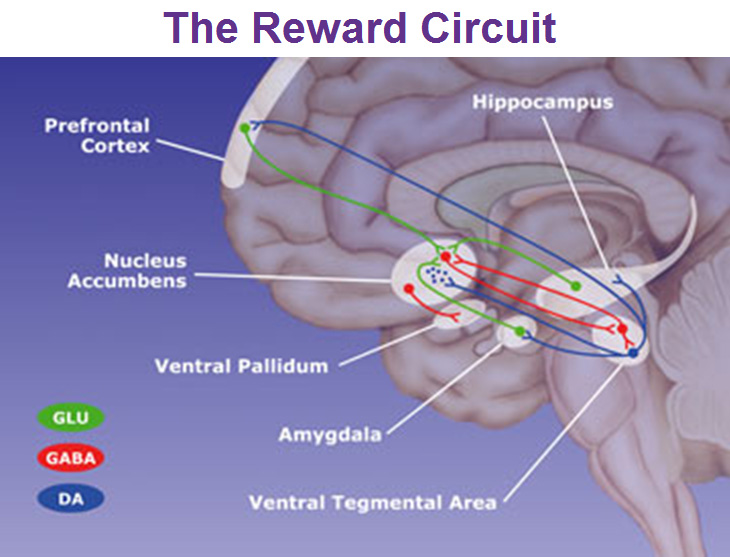
The main issue, however, is that "soul" theories have many more problems than naturalistic ones do. The scope of soul theories has steadily contracted over time. No one expects to explain liver function by invoking the soul, or function of the heart. Those days are long gone. Our mental lives too are being progressively pinned down to physical events in the brain. Memory, for instance, depends on hippocampal function, and can be tracked to cortical engrams relayed from the hippocampus. What is left for a putative soul to do, once memories are stored physically, emotions happen via basal areas like the amygdala, and decisions are made in the neocortex? The whole concept makes less and less sense with time, as intuition gives way to reality-based analysis of what actually creates our minds and selves.

Lastly, whether the NDE is informed by some cultural programming as well as biological programming is quite a live issue. One subject related as follows:
"The review was measured in the beginning, but then the pictures came faster and faster, and it seemed like the movie reel was running out ... It went faster and faster, and then I heard myself, along with the entire universe in my head, screaming in crescendo, "Allah ho akbar!'"

Such a fate would surely be disconcerting, not only to me, but to many believers in the soul and afterlife.

  • Islam's gravest sin. God: “I am as My servant thinks of Me.”
  • Apparently, atheists are at fault.
  • Finding gullible, on TV.
  • Some notes on corruption, cooptation, and Washington sleazefests.
  • Republican strategy of complete intransigence and destruction emerges. Why is anyone surprised?
  • Why does this man want to be president? Krugman chimes in too.
  • Tribute to Milton Friedman.
  • Elvis Costello provides a playlist.
  • What happened to Japan? Is this what we are facing?
  • Economists lying for ideology.
  • Local police get awfully trigger-happy around black people. 
  • Is race less of a factor in this election? I would say it is more.. in a future blog.
  • A little Oscar Peterson.
  • Economics quote, from Mark Thoma, on the Ryan budget.
"If you think the middle class has it too good, too much security, taxes aren't high enough, not enough fear of unemployment, too much help for education, and so on, while the wealthy haven't been coddled enough in recent years, not enough tax cuts, too little upward redistribution of income, not enough bank bailouts, etc., etc., then the Republican proposals should make you happy."

Saturday, August 4, 2012

Debt and debt bombs

Which debts are the most toxic? Which are prairie fires, and which are hearth fires?

Apparently, the US is running up a tab that our children will be working in coal mines to repay until the end of time. That is, to hear the Republicans talk about it, now that Democrats are in charge of spending. When Republicans are in charge, the national debt "doesn't matter", and military adventures particularly are ripe for charging on the big credit card, being "special" expenses, of course.

The US is full of debts. Every dollar bill is a liability of the US Treasury, and most financial assets are someone else's debt. What makes one debt toxic and another a pillar of stability and the American way? A rundown of the most significant debt pools in the US, is, as far as I can make out, runs something like this:

Total bonds of all kinds:31.2 trillion
Corporate bonds:3.6 trillion
Mortgage debt:13 trillion
Municipal bonds2.7 trillion
Federally issued bonds:17 trillion
Consumer credit debt:2.5 trillion
Corporate paper1 trillion
Money Market / Repos10 trillion
Currency in circulation 1.0 trillion
(Corporate stocks:15 trillion (NYSE only)
4.5 trillion (Nasdaq) )
(Home equity20 trillion, residential
5 trillion, commercial)
_____________________________________
Total wealth:~60+ trillion
(Derivatives:hundreds of trillions, in virtual gambles.)


So about half of what is customarily considered wealth in the US is in the form of debt instruments. What makes a debt instrument problematic to the economy at large? One characteristic is volatility. The current crisis was brought on by the unanticipated (by most) reversal in housing appreciation. Collateral disappeared, refinancing capability dried up, and an enormous edifice of debt (CDOs, MBS's, banks themselves) built on top of this creaking foundation was called into question, then into panic. The Federal reserve / Treasury, using its essentially limitless funds, allowed some to die and some to live.

So some debts are destabilizing if their solvency is pegged to market valuations that can gyrate significantly. Corporate debt is similar, though less prone to market-wide crisis than real-estate debt, which is pegged to a single nation-wide market. Corporations go bankrupt all the time, yet the corporate bond market marches on, adding layers of higher and higher (junk) risk for adventurous speculators. Rarely, however, does a complete market meltdown occur. Even if the stock market crashes, bonds are senior and get first crack at the assets of a company in any crisis.

A second issue is serviceability. Again in this crisis, as people lost jobs and income, their mortgages succumbed to deliquency and ultimately foreclosure- a loss to everyone involved. Corporations can go bust as well, but their books tend to be a bit better understood, with risks priced into their bonds as the market evolves. At any rate, the corporate bond market seems less prone to cataclysmic revaluations than real estate, at its marginal frontiers.

Lastly come government debts. Municipalities do go bankrupt, as we have recently seen. And it may become more common as the enormous public pension commitment overhang screws more cities to the wall. But still, it is very rare, and bankruptcy by entire states is unknown in the US.

Still more is bankruptcy by the federal government unknown. Not only is its power to tax enormous, but its power to issue the currency makes insolvency literally impossible, from any financial perspective. So its stock of debt neither gets called in during a crisis, nor is subject to wild swings of perceived quality and soundness for any financial reason, but instead swings, if at all, at the perceived willingness of the political institutions to stand behind it.

So the cost of federal debt does not lie in financial system instability or serviceability, unlike other forms of debt. It lies elsewhere, in the political pressures of taxation to pay the debt's interest, and / or inflation if the neccessary taxation is spinelessly avoided. Obviously, at this low point in the business cycle, these costs are not issues at all. The cost of our federal debt continues to decrease as interest rates decline and the government rolls over past longer-term debt. This is a good time to exchange private debt for public debt.

But in the long run, nominal and real interest rates will go up, and inflation pressures will re-appear, and the political cost of carrying high federal debt (i.e. transferring money from taxpayers to rich bond-holders) will increase. When and by how much? It is hard to say. Japan is going on 2+ decades of ultra-low interest rates and economic stasis. If we face that future, then essentially never and not much is the right answer. At the same time, this is not a future anyone wants.

Even if we don't care about grinding unemployment and domestic hopelessness, perhaps we might care about our geostrategic position that is melting away as the US and the West stagnate vs the growing powers of China and Asia. Or perhaps we might care about the real demographic problem of the baby boom, which is not (in macro terms) how to pile up enough pieces of gold for their retirement, but how to educate enough workers and drive enough real economic innovation and growth to take care of those boomers in old age without impoverishing everyone else. Dollars don't do nursing and don't replace hips ... doctors and nurses do.

If we were to successfully use federal debt to restore normal domestic economic activity, we might have to reduce federal spending at some future point, or raise taxes to match, or use the Federal Reserve's interest rate arm to dampen growth in the private sector. It may be difficult politics, but it isn't rocket science. There are plenty of tools at our disposal to deal with it. It just takes a functional & rational political system. Which is truly the worrisome point in today's dilemma, making all the more maddening the political right's policy of destroying the government to prove their thesis that government is bad, which justifies destroying it, .. because it doesn't work .. because .. you get the picture.

  • Krugman on why the debt is OK.
  • The left side of the deficit debate is hardly left at all.
  • California is in a serious energy bind.
  • Life after fossil carbon.
  • Steve Jobs- the lost interview. Very interesting thoughts on technology, craftsmanship, and how to run companies.
  • This would be hard to make up.. "British solution to unemployment – make them work for free", by Bill Mitchell.
  • A post-religion story.
  • China faces a real estate crunch.
  • NHS- what real democracy looks like.
  • Defense department: best-in-class at screwing up software projects.
  • Poland has the answer to the euro.. get out of it.
  • Now to take your mind off it all, a Haydn recommendation from Steven Stark.

Saturday, July 28, 2012

Ripples in the memory of space

Progress in figuring out how the hippocampus replays navigation memories.

While it would certainly be nice for our minds to be, as they intuitively present to us, disembodied and perfect, they turn out to be more like machines, whose workings are amazingly intricate, but quite physical. A good deal has been learned about a few aspects of memory- how it gets recorded in synapses and in anatomical locations in the brain like the hippocampus, and how it is read back out.

The recent paper describes how spatial memory in rats relates to specific electrical/nerve signals called sharp wave ripples, or SWR for short. It was previously found that during sleep, rats (and by analogy, and more obviously, humans and dogs) replay scenes from the awake state in rapid fashion, so that researchers with sufficient electrodes in the subject's brain can even trace where the rat is in a dream, relative to a training maze it has been sent through during the day.

SWR's are common during these sleep+dreaming episodes, and are known to correlate with better learning. But SWR's take place in the awake state as well, and the current paper finds that they correlate with spatial memorization, and thus learning & performance in tests like mazes.


The experimental approach was to find anatomical locations where SWR were taking place in the hippocampus of rats while they were being trained to a new maze task, and then interfere electrically with those signals in a precise way that detects the beginning of a ripple and within 25 milliseconds cancels the rest of it, (total of about 50-100 milliseconds, typically). As a control, blasts were sent to the same locations, but at different times that didn't interfere with the SWR signal.

Experimental protocol. Animals while awake and active, were electrically recorded and also zapped with SWR-disrupting signals (red line) that cancelled the SWR replay sequence within 25 milliseconds. The green line marks when the SWR was automatically detected. Bottom right is a blow-up of the upper right electrical trace of one disrupted nascent SWR. The bar is 50 ms and 200 microvolts.

Rats with hippocampus damage eventually learn to go down the correct arms of the maze, but take far longer than normal rats. The job involves two quite different tasks- remembering which of two forks to take (the outbound decision). The rule is imposed by the experimenter, in an alternating sequence, using visually distinct mazes in successive trials, which requires remembering where one is and also what the prior trip was like. Second is the ability to remember how to get back to the start of the maze, (the center arm), which requires some degree of memory of where one is and where that was, which is, in a place-cell coordinate system, always the same. The experimenters claim that the inbound task is substantially easier, and it is the outbound test where they have in previous work established that rats use memory replays of past trips, (perhaps using more remote memories), not the inbound task.

The result was that only the outbound task was impaired by shorting the SWR signals. The inbound task was still learned at the normal speed. Whether the memory process is conscious or unconscious, the researchers were able to specifically interfere with the rat's thought process through a fine-grained electrical counter-stimulation; a fascinating development.

What are SWR's? They have been characterized over the last decade as rapid replays of navigation markers, (such as place cell firing), speeded up in time and replayed either forwards or backwards. They represent firing of place cells from throughout the hippocampus, as they would during a travelling sequence going from location to location, only the rat is at rest, and the sequence is speeded up twenty-fold! They are thus believed to constitute memory and simultaneously a way to convey this memory to other areas of the brain. It is truly a remarkable story.

Here are a few quotes from researchers doing this work:
"Sequences of neural activity occurring at the third time scale are observed during both sleep and awake but restful states, when animals are paused and generally inattentive, and are associated with sharp wave ripple complexes (SWRs) observed in the hippocampal local field potentials. During the awake state, these sequences have been shown to begin near the animal’s location and extend forward (forward replay) or backward (backward replay), and have been hypothesized to play a role in memory consolidation, path planning, and reinforcement learning." - thesis by Anoopum Gupta, 2011.

"During pauses in exploration, ensembles of place cells in the rat hippocampus re-express firing sequences corresponding to recent spatial experience. Such 'replay' co-occurs with ripple events: short-lasting (approximately 50-120 ms), high-frequency (approximately 200 Hz) oscillations that are associated with increased hippocampal-cortical communication. In previous studies, rats exploring small environments showed replay anchored to the rat's current location and compressed in time into a single ripple event. Here, we show, using a neural decoding approach, that firing sequences corresponding to long runs through a large environment are replayed with high fidelity and that such replay can begin at remote locations on the track. Extended replay proceeds at a characteristic virtual speed of approximately 8 m[eters]/s[econd] and remains coherent across trains of ripple events. These results suggest that extended replay is composed of chains of shorter subsequences, which may reflect a strategy for the storage and flexible expression of memories of prolonged experience." - abstract by Davidson, et al. 2009

"As we have noted, SWR-associated replay has been found to evolve approximately 20 times faster than behavior, and SWRs are on the order of 100 ms in duration. Given a running speed of 0.5 m/s, this means that the replay seen during a single SWR should recapitulate approximately 1 m of behavior." 
"We make several novel contributions: we show that replay proceeds at a relatively constant 'virtual' velocity; that it can proceed over trajectories as long as the complete environment; that this extended replay spans trains of closely-spaced SWRs; and that replay can begin at locations remote from the animal." - thesis by Thomas Davidson, 2009
Included in these findings is that SWRs can encompass not only replays of where rats have been, up to large areas and forward and reverse sequences, but also paths they have never taken, but could take, suggesting that planning may be taking place. So basically, (and however crudely and invasively), scientists are gaining the technology and knowledge to begin to eavesdrop on what rats are thinking- what they are remembering and what they are planning.


  • How much must we destroy for oil?
  • Atheism - out & proud.
  • Salon's very funny New Yorker video drama.. especially the "shrink" episode.
  • Religion, bad philosophy, and immorality seem to go together alot.
  • Republican unworthiness continued.. fiscal edition. "There’s a reason why we can’t seem to make any progress on our fiscal mess: One of our two political parties has gone nuts."
  • Cringely on IT outsourcing.. India's high school graduates man IBM's services, more or less.
  • Europe.. is it nothing but class warfare, like it is in the US? "Unfortunately for the German population, while German business profited handsomely, and  German Banks exported capital to the rest of the world, the costs were borne by German  workers who faced wage pressure."  (Capital which is, incidentally, going down the tubes. But no matter!)
  • Open corruption continues in the US.
  • MMT crows about its calls on the euro.
  • But Margaret Thatcher, bless her, saw the euro crisis coming too.
  • Bill Mitchell explains what he thinks is wrong with Alan Blinder's suggestion to stop interest support payments on bank reserves.
  • Economics quote of the week, from Bill Mitchell, from an NGO report. Wealth doesn't trickle down, it washes out to sea.
"A global super-rich elite has exploited gaps in cross-border tax rules to hide an extraordinary £13 trillion ($21tn) of wealth offshore – as much as the American and Japanese GDPs put together … at least £13tn – perhaps up to £20tn – has leaked out of scores of countries into secretive jurisdictions such as Switzerland and the Cayman Islands with the help of private banks, which vie to attract the assets of so-called high net-worth individuals."


Saturday, July 21, 2012

I attend a religious service

Interesting rituals pervade the ritualized combat ... of baseball.

Take me out to the ball game,

Oh, take me out to the ball game! America's pastime is not only one of the most refined and elegant sports, but the home of endless rituals and symbolism. It could be viewed as the center of our civic religion, with politics a peripheral and grubby afterthought. And it is better than typical religions- a living ritual enacting the competitive spirit that truly characterizes American existence, enclosed within a lovingly maintained structure of rules, decorum, and tradition. Thankfully, my town recently acquired a ultra-minor professional baseball team, which is a joy to watch.

Ball games have a long history in the Americas as sacred events. Bats were even used in some prehistoric cases. In our modern game, the leading actor (i.e. the pitcher) stands on a central mound, reminiscent, if only in a small way, of the religious mounds of pre-Columbian America. This lonely figure faces the most trying test, from which he (or she!) will emerge either a hero, or defeated by Lilliputians sent up to hit against him. Surrounding him is a perfect square, the number four being highly significant in many cultures and mythologies, not to mention in nature generally. The opposing players seek to circumambulate the square, a common religious action, and while typically mark of respect, in this case it is an act of power over rival priests. It is a passion play of sorts, though the outcome is open rather than closed.

Take me out with the crowd;

We begin with communal singing- the national anthem, hands over hearts. Then it is on to chanting, clapping, stomping, waving, dancing, all in a re-ligio... sense of communal connectedness. An invisible being announces the service, keeping everyone onboard with a narration of key events and rituals. In between the enactment of the heroic contest in the main drama, spectators and miscellaneous notables come on to the field to take cameo turns, throwing out the ceremonial first pitch, running races and other contests, winning boons, honoring aged or fallen heros. Altar boys, er bat boys, run out one of the priestly tools- the pitcher's rosin bag, and serve the heros unstintingly through the game. The seventh inning stretch brings on the classic baseball song in chorus.

Buy me some peanuts and Cracker Jack,

Then it is on to communal eating of characteristic tribal foods. The heart of Americana- hot dogs, corn dogs, peanuts, chili, ice cream. I guess nachos count as well- the mingling of native corn with the newcomer's dairy. Healthy? No. Spiritually nourishing? You bet. While no one makes claims of transubstantiation for these foods, they make and evoke memories of unusual strength.

I don't care if I never get back.

The admission gate marks a sacred threshold, entrance to the outer precincts of the progressively more sacred central field, square, and mound. Time is suspended, as baseball does not run on a clock, but finishes whenever the ritual drama has run its course by its own arcane rules. Nor does the accumulating score lead relentlessly to the final fate. It ain't over till it's over, to use the classic maxim, as pitching breakdowns can lead to dramatic changes late in the game.

Let me root, root, root for the home team,

While in many sports, each team has its partisan section cheering it on, (soccer hooliganism comes to mind), in baseball it is more customary for all the spectators to root for the home team only, at least in the sort of minor league game portrayed here. While this may be impolite to the visiting team, it creates a civically unified atmosphere.

The Greeks made athletic festivals central to their culture, as have many others. It was a form of divination, showing whom the gods favored, and whom not. Sport was one way to express and strengthen the civic cult, as well as to transcend it, in the setting of pan-Hellenic games, even though they didn't quite get around to replacing war with sport.

If they don't win, it's a shame.

These days, the rules- i.e. moral concepts of fairness and popular legitimacy- matter far more than theories of divine favor. As a civic religion, it imbues a fundamentally secular activity with many of the narratives and spiritual archetypes embedded in human nature.

The rules of baseball are just a little more sacred and tradition-bound than those of other sports. Thus the steroid scandal hit baseball particularly shamefully, though far, far more damaging derelictions happened elsewhere in the culture, as our leaders (one of whom had helped run a baseball team, oddly enough) started a gratuitous war, showered money on the well-to-do, and raped the poor, greedy, & unsophisticated with predatory loans, making way for the current economic crisis. Baseball itself became ever more besotted with corporate advertising, corporate stadiums, and a fixation on money generally. Rituals like baseball are inescapably connected with the trends afoot elsewhere in the culture. Demons can not be exorcised by ritual alone, but only by taking the lessons of the ritual- fairness, integrity, diligence, persistence, respect- into our wider lives.

For it's one, two, three strikes, you're out,

The high priest and the low priest are having a stylized game of catch, with the all-white sacred ball. (I'm not going to get into Freudian theories about the bats, balls, gloves, etc.!). Does the batting team of priests from the competing civitas have the power to interrupt this golden line? If not, the pitcher has achieved a perfect game. If the batters do get hits, can the fielding team prevent the ball from touching the mundane earth? If not, can the fielders at least prevent the ball from escaping the sacred precincts, inner and outer?

Which team has greater occult powers, exhibited through their skill and luck? The trip around the square marks the stations of this passion play, with home the ultimate goal, just as it was for Dorothy. An umpire, of yet another priestly class, maintains the balls, discarding those sullied by contact with the earth. He also lovingly sweeps home plate back to its pristine condition and validates the golden line drawn between pitcher and catcher.

At the old ball game.

Who gets to play the hero? This is far more than a question of skill. The players represent their civic tribes, and represent the archetypal hero with occult powers. This is why breaking the color line in baseball was far more significant than it was in other sports, as baseball was and remains more civically identified and more archetypally powerful than sports like basketball and football.

One reason is that baseball has very little physical contact. The ball is the central mediator- between players and between teams. Even tag-outs are made through the glove, with the ball couched within, or at its most direct, with the ball directly held in the hand outstretched. Even in the extremis of the bean ball, the ball still mediates, showing its dark power. However, the bean ball is a serious breach of decorum, both violating the golden line and bespeaking a loss of control/power by the pitching team- a descent from civilized rules (i.e. sacred ritual) into barbarity.

It is hard to leave- to break the spell of the sacred service, space, actors, and drama. But it wouldn't be sacred if there weren't mundane life to provide a backdrop.

  • Another author investigates the diamond way.
  • Basketball is an OK game too: American ballet, to baseball's mystical drama.
  • Character in the financial elites, or lack thereof. Do they really have to be psychopathic?
  • "Worst states for business" are the best states for people.
  • Is corruption becoming unstoppable? Does money have to ruin all public functions?
  • Tom Coburn- standing up to the terrorists, a little.
  • Law of the sea.. further unworthiness of the Republican party.
  • This is the soul, which we can not remove.
  • Krugman on global scorching/burning/warming ...
  • Economics quote of the week, by Bill Mitchell, speaking of stagnation in the US, as well as the nature of intergenerational responsibilities.. are they real or are they financial?:
"The pro-cyclical government cutbacks have introduced a vicious circle of income loss, saving loss, wealth destruction, continuing real estate crisis, loss of state and local revenue, further cutbacks according to the application of their inappropriate fiscal rules (balanced budget amendments). 
The pro-cyclical nature of state and local government employment is one of the principle reasons the US recession has endured and will ensure the long-term damage to that nation’s vitality and ability to provide high quality services to its people. 
The reasoning in the public debate about the future consequences of government budget deficits is wrong-headed. The capacity of the US to provide for an ageing society amidst the long-term decline in its industry doesn’t depend on cutting in to public spending now – which is patently causing law and order to deteriorate, the standard of public education and health to slip. 
Exactly the opposite response is required. Schools need to be revitalised. Communities need to be sure the streets are safe so that businesses will have an incentive to invest. People need to be mentally and physically well."
  • Economics bonus graph of the week: Krugman on middle class stagnation: