Saturday, August 11, 2012

Death- beginning or end?

What are we to make of the near death experience? A review of "Evidence of the afterlife" by Dr. Jeffrey Long.

Apparently, it feels wonderful to die. Everyone has by now heard about near death experiences (NDEs), which comprise floating out-of-body experiences, approach to a white light or tunnel, a highlight reel of one's life, communing with others who are dead, and positive feelings all around. This book is built around a large compendium of first-person reports of such NDEs, and, as the title indicates, comes to a definitive conclusion about what they mean for one of the most durable hopes of humanity- the afterlife.

The book is build from a web site the author set up to solicit NDE reports from around the world. He has compiled over 1,000 reports, using a structured survey form, and has personally interviewed over 600 respondents.

The first thing to say is that these observations all seem true. These people are not lying, and accurately report what they experience. The experience is not only curious, and very positive, but also personally powerful, altering their view of life and death, and their personalities. They are often making reports many years after the fact, recalling phenomenally durable and affecting memories. Just that alone is amazing to hear about, and even to the most inveterate skeptic makes the whole process of death a bit less daunting.

One example with many of the typical elements:
I found myself floating up toward the ceiling. I could see everyone around the bed very plainly , even my own body. I thought how odd it was that they were upset about my body. I was fine and I wanted them to know that, but there seemed to be no way to let them know. It was as though there were a veil or a screen between me and the others in the room. 
I became aware of an opening, if I can call it that. It appeared to be elongated and dark, and I began to zoom through it. I was puzzled yet exhilarated. I came out of this tunnel into a real of soft, brilliant love and light. The love was everywhere. It surrounded me and seemed to soak through in my very being. At some point I was shown, or saw, the events of my life. They were in a kind of vast panorama. All of this is really just indescribable. People I knew who had died were there with me in the light- a friend who had died in college, my grandfather, and a great-aunt, among  others. They were happy, beaming. 
I didn't want to go back, but I was told that I had to by a man in light. I was being told that I had not completed what I had to do in life. 
I came back to my body with a sudden lurch.

On the other hand, Long handles these observations in a most unscientific way, hammering away on the "proofs" he has assembled for the interpretation that they are exactly what they seem- trips to that undescovered country, from whose bourn Shakespeare thought no traveller returns. His proofs are nine-fold:

1. In medical terms, the patient is dead or close to death when these experiences take place- no pulse, no EEG, no breathing. Squaring this with the complexity of the NDE experience is rather difficult.

2. Out of body experiences occur, typically a sense of floating high in the room, and observing what is going on, often in precise detail, even of activities going on in nearby rooms.

3. Even people who have been blind from birth can have visual experiences during an NDE.

4. Subjective consciousness is typically heightened during NDE- the person reports feeling exceptionally clear, and is later able to report quite a bit of detail. This while they would otherwise be going unconscious and losing bodily function, blood circulation, and EEG signals.

5. The flashing life review is accurate, even dredging up forgotten episodes.

6. 96% of the beings encountered in this experience have previously died, consistent with the idea that their final abode is being encountered.

7. Children as young as three have all the elements of these experiences that adults do.

8. People around the world have all the elements of these experiences as well.

9. Those who experience NDE frequently undergo deep changes in their attitudes and lives, including increased psychic abilities.

As you can imagine, some of these characteristics are less probative than others, and their value as evidence depends on what counter-model one uses for comparison. For instance, the ability of blind people to have visual experiences during an NDE (even though they do not typically have visual dreams, for instance) may derive from a brain experience that exists purely in consciousness, rather than requiring the sensory brain areas. One is eating the pure frosting, as it were, rather than the whole cake. Blind people have functional and physical maps of the world, so transposing them into pure experiential consciousness might make them seem visual, under unusual circumstances. Similar arguments apply to the moving nature of these experiences, and the sense of understanding everything (which often comes up in NDE narratives) which arise in LSD trips and other extreme hallucinations.

A great failing is that Long does not offer very coherent skeptical perspectives. My model of all this is that hearing may remain intact during these experiences and accounts for the ability to perceive quite accurately what is going on around the patient, during the out-of-body experience. This resembles our ability in dreams to incorporate auditory perception, though to a less accurate degree. Out-of-body experiences are more common than NDEs, happening during nightmares, drug experiences, etc., and do not seem to generally require a non-naturalistic explanation. Looking to Long's web site for NDEs by deaf people, there are a few, and none appear to offer the kinds of precisely observed out-of-body experiences that the others do, which would be consistent with such a hypothesis.

A second part of my model for NDE is that there is a great deal more to the brain than is detected by an EEG. EEG picks up surface brain waves, but the more important areas, at any rate more emotional and consciousness-forming parts, seem to lie deeper. One could imagine that loss of blood flow does not lead to a uniform shut-down of everything, but rather a flooding of some pain-relieving hormones, and concentration of remaining activity in some core areas.
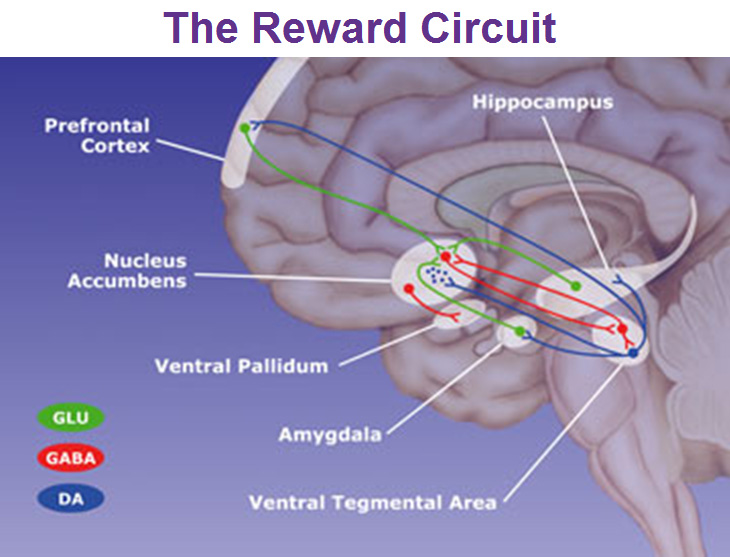
Key areas for emotion (and memory) happen far from the surface of the brain.

Additionally, the executive cortical areas of the brain typically have the function of slowing down or modulating older areas, (the old Freudian super-ego/id system), so one can imagine that a catastrophic loss of blood flow might have just the NDE effects based in core brain areas plus persistent auditory function. Indeed, study of decapitated rats indicates that there really is quite a bit going on in the minute after blood flow stops, even under a naturalist paradigm.

At any rate, the NDE is a serious challenge to a naturalist world view. While one can offer some speculative models of how all this might be explained from brain activities, we are dealing with a lot of unknowns. We don't even know how consciousness arises in the brain, so determining how extremely unusual alternate states of consciousness happen is going to be heavily speculative for the time being.

The main issue, however, is that "soul" theories have many more problems than naturalistic ones do. The scope of soul theories has steadily contracted over time. No one expects to explain liver function by invoking the soul, or function of the heart. Those days are long gone. Our mental lives too are being progressively pinned down to physical events in the brain. Memory, for instance, depends on hippocampal function, and can be tracked to cortical engrams relayed from the hippocampus. What is left for a putative soul to do, once memories are stored physically, emotions happen via basal areas like the amygdala, and decisions are made in the neocortex? The whole concept makes less and less sense with time, as intuition gives way to reality-based analysis of what actually creates our minds and selves.

Lastly, whether the NDE is informed by some cultural programming as well as biological programming is quite a live issue. One subject related as follows:
"The review was measured in the beginning, but then the pictures came faster and faster, and it seemed like the movie reel was running out ... It went faster and faster, and then I heard myself, along with the entire universe in my head, screaming in crescendo, "Allah ho akbar!'"

Such a fate would surely be disconcerting, not only to me, but to many believers in the soul and afterlife.

  • Islam's gravest sin. God: “I am as My servant thinks of Me.”
  • Apparently, atheists are at fault.
  • Finding gullible, on TV.
  • Some notes on corruption, cooptation, and Washington sleazefests.
  • Republican strategy of complete intransigence and destruction emerges. Why is anyone surprised?
  • Why does this man want to be president? Krugman chimes in too.
  • Tribute to Milton Friedman.
  • Elvis Costello provides a playlist.
  • What happened to Japan? Is this what we are facing?
  • Economists lying for ideology.
  • Local police get awfully trigger-happy around black people. 
  • Is race less of a factor in this election? I would say it is more.. in a future blog.
  • A little Oscar Peterson.
  • Economics quote, from Mark Thoma, on the Ryan budget.
"If you think the middle class has it too good, too much security, taxes aren't high enough, not enough fear of unemployment, too much help for education, and so on, while the wealthy haven't been coddled enough in recent years, not enough tax cuts, too little upward redistribution of income, not enough bank bailouts, etc., etc., then the Republican proposals should make you happy."

Saturday, August 4, 2012

Debt and debt bombs

Which debts are the most toxic? Which are prairie fires, and which are hearth fires?

Apparently, the US is running up a tab that our children will be working in coal mines to repay until the end of time. That is, to hear the Republicans talk about it, now that Democrats are in charge of spending. When Republicans are in charge, the national debt "doesn't matter", and military adventures particularly are ripe for charging on the big credit card, being "special" expenses, of course.

The US is full of debts. Every dollar bill is a liability of the US Treasury, and most financial assets are someone else's debt. What makes one debt toxic and another a pillar of stability and the American way? A rundown of the most significant debt pools in the US, is, as far as I can make out, runs something like this:

Total bonds of all kinds:31.2 trillion
Corporate bonds:3.6 trillion
Mortgage debt:13 trillion
Municipal bonds2.7 trillion
Federally issued bonds:17 trillion
Consumer credit debt:2.5 trillion
Corporate paper1 trillion
Money Market / Repos10 trillion
Currency in circulation 1.0 trillion
(Corporate stocks:15 trillion (NYSE only)
4.5 trillion (Nasdaq) )
(Home equity20 trillion, residential
5 trillion, commercial)
_____________________________________
Total wealth:~60+ trillion
(Derivatives:hundreds of trillions, in virtual gambles.)


So about half of what is customarily considered wealth in the US is in the form of debt instruments. What makes a debt instrument problematic to the economy at large? One characteristic is volatility. The current crisis was brought on by the unanticipated (by most) reversal in housing appreciation. Collateral disappeared, refinancing capability dried up, and an enormous edifice of debt (CDOs, MBS's, banks themselves) built on top of this creaking foundation was called into question, then into panic. The Federal reserve / Treasury, using its essentially limitless funds, allowed some to die and some to live.

So some debts are destabilizing if their solvency is pegged to market valuations that can gyrate significantly. Corporate debt is similar, though less prone to market-wide crisis than real-estate debt, which is pegged to a single nation-wide market. Corporations go bankrupt all the time, yet the corporate bond market marches on, adding layers of higher and higher (junk) risk for adventurous speculators. Rarely, however, does a complete market meltdown occur. Even if the stock market crashes, bonds are senior and get first crack at the assets of a company in any crisis.

A second issue is serviceability. Again in this crisis, as people lost jobs and income, their mortgages succumbed to deliquency and ultimately foreclosure- a loss to everyone involved. Corporations can go bust as well, but their books tend to be a bit better understood, with risks priced into their bonds as the market evolves. At any rate, the corporate bond market seems less prone to cataclysmic revaluations than real estate, at its marginal frontiers.

Lastly come government debts. Municipalities do go bankrupt, as we have recently seen. And it may become more common as the enormous public pension commitment overhang screws more cities to the wall. But still, it is very rare, and bankruptcy by entire states is unknown in the US.

Still more is bankruptcy by the federal government unknown. Not only is its power to tax enormous, but its power to issue the currency makes insolvency literally impossible, from any financial perspective. So its stock of debt neither gets called in during a crisis, nor is subject to wild swings of perceived quality and soundness for any financial reason, but instead swings, if at all, at the perceived willingness of the political institutions to stand behind it.

So the cost of federal debt does not lie in financial system instability or serviceability, unlike other forms of debt. It lies elsewhere, in the political pressures of taxation to pay the debt's interest, and / or inflation if the neccessary taxation is spinelessly avoided. Obviously, at this low point in the business cycle, these costs are not issues at all. The cost of our federal debt continues to decrease as interest rates decline and the government rolls over past longer-term debt. This is a good time to exchange private debt for public debt.

But in the long run, nominal and real interest rates will go up, and inflation pressures will re-appear, and the political cost of carrying high federal debt (i.e. transferring money from taxpayers to rich bond-holders) will increase. When and by how much? It is hard to say. Japan is going on 2+ decades of ultra-low interest rates and economic stasis. If we face that future, then essentially never and not much is the right answer. At the same time, this is not a future anyone wants.

Even if we don't care about grinding unemployment and domestic hopelessness, perhaps we might care about our geostrategic position that is melting away as the US and the West stagnate vs the growing powers of China and Asia. Or perhaps we might care about the real demographic problem of the baby boom, which is not (in macro terms) how to pile up enough pieces of gold for their retirement, but how to educate enough workers and drive enough real economic innovation and growth to take care of those boomers in old age without impoverishing everyone else. Dollars don't do nursing and don't replace hips ... doctors and nurses do.

If we were to successfully use federal debt to restore normal domestic economic activity, we might have to reduce federal spending at some future point, or raise taxes to match, or use the Federal Reserve's interest rate arm to dampen growth in the private sector. It may be difficult politics, but it isn't rocket science. There are plenty of tools at our disposal to deal with it. It just takes a functional & rational political system. Which is truly the worrisome point in today's dilemma, making all the more maddening the political right's policy of destroying the government to prove their thesis that government is bad, which justifies destroying it, .. because it doesn't work .. because .. you get the picture.

  • Krugman on why the debt is OK.
  • The left side of the deficit debate is hardly left at all.
  • California is in a serious energy bind.
  • Life after fossil carbon.
  • Steve Jobs- the lost interview. Very interesting thoughts on technology, craftsmanship, and how to run companies.
  • This would be hard to make up.. "British solution to unemployment – make them work for free", by Bill Mitchell.
  • A post-religion story.
  • China faces a real estate crunch.
  • NHS- what real democracy looks like.
  • Defense department: best-in-class at screwing up software projects.
  • Poland has the answer to the euro.. get out of it.
  • Now to take your mind off it all, a Haydn recommendation from Steven Stark.

Saturday, July 28, 2012

Ripples in the memory of space

Progress in figuring out how the hippocampus replays navigation memories.

While it would certainly be nice for our minds to be, as they intuitively present to us, disembodied and perfect, they turn out to be more like machines, whose workings are amazingly intricate, but quite physical. A good deal has been learned about a few aspects of memory- how it gets recorded in synapses and in anatomical locations in the brain like the hippocampus, and how it is read back out.

The recent paper describes how spatial memory in rats relates to specific electrical/nerve signals called sharp wave ripples, or SWR for short. It was previously found that during sleep, rats (and by analogy, and more obviously, humans and dogs) replay scenes from the awake state in rapid fashion, so that researchers with sufficient electrodes in the subject's brain can even trace where the rat is in a dream, relative to a training maze it has been sent through during the day.

SWR's are common during these sleep+dreaming episodes, and are known to correlate with better learning. But SWR's take place in the awake state as well, and the current paper finds that they correlate with spatial memorization, and thus learning & performance in tests like mazes.


The experimental approach was to find anatomical locations where SWR were taking place in the hippocampus of rats while they were being trained to a new maze task, and then interfere electrically with those signals in a precise way that detects the beginning of a ripple and within 25 milliseconds cancels the rest of it, (total of about 50-100 milliseconds, typically). As a control, blasts were sent to the same locations, but at different times that didn't interfere with the SWR signal.

Experimental protocol. Animals while awake and active, were electrically recorded and also zapped with SWR-disrupting signals (red line) that cancelled the SWR replay sequence within 25 milliseconds. The green line marks when the SWR was automatically detected. Bottom right is a blow-up of the upper right electrical trace of one disrupted nascent SWR. The bar is 50 ms and 200 microvolts.

Rats with hippocampus damage eventually learn to go down the correct arms of the maze, but take far longer than normal rats. The job involves two quite different tasks- remembering which of two forks to take (the outbound decision). The rule is imposed by the experimenter, in an alternating sequence, using visually distinct mazes in successive trials, which requires remembering where one is and also what the prior trip was like. Second is the ability to remember how to get back to the start of the maze, (the center arm), which requires some degree of memory of where one is and where that was, which is, in a place-cell coordinate system, always the same. The experimenters claim that the inbound task is substantially easier, and it is the outbound test where they have in previous work established that rats use memory replays of past trips, (perhaps using more remote memories), not the inbound task.

The result was that only the outbound task was impaired by shorting the SWR signals. The inbound task was still learned at the normal speed. Whether the memory process is conscious or unconscious, the researchers were able to specifically interfere with the rat's thought process through a fine-grained electrical counter-stimulation; a fascinating development.

What are SWR's? They have been characterized over the last decade as rapid replays of navigation markers, (such as place cell firing), speeded up in time and replayed either forwards or backwards. They represent firing of place cells from throughout the hippocampus, as they would during a travelling sequence going from location to location, only the rat is at rest, and the sequence is speeded up twenty-fold! They are thus believed to constitute memory and simultaneously a way to convey this memory to other areas of the brain. It is truly a remarkable story.

Here are a few quotes from researchers doing this work:
"Sequences of neural activity occurring at the third time scale are observed during both sleep and awake but restful states, when animals are paused and generally inattentive, and are associated with sharp wave ripple complexes (SWRs) observed in the hippocampal local field potentials. During the awake state, these sequences have been shown to begin near the animal’s location and extend forward (forward replay) or backward (backward replay), and have been hypothesized to play a role in memory consolidation, path planning, and reinforcement learning." - thesis by Anoopum Gupta, 2011.

"During pauses in exploration, ensembles of place cells in the rat hippocampus re-express firing sequences corresponding to recent spatial experience. Such 'replay' co-occurs with ripple events: short-lasting (approximately 50-120 ms), high-frequency (approximately 200 Hz) oscillations that are associated with increased hippocampal-cortical communication. In previous studies, rats exploring small environments showed replay anchored to the rat's current location and compressed in time into a single ripple event. Here, we show, using a neural decoding approach, that firing sequences corresponding to long runs through a large environment are replayed with high fidelity and that such replay can begin at remote locations on the track. Extended replay proceeds at a characteristic virtual speed of approximately 8 m[eters]/s[econd] and remains coherent across trains of ripple events. These results suggest that extended replay is composed of chains of shorter subsequences, which may reflect a strategy for the storage and flexible expression of memories of prolonged experience." - abstract by Davidson, et al. 2009

"As we have noted, SWR-associated replay has been found to evolve approximately 20 times faster than behavior, and SWRs are on the order of 100 ms in duration. Given a running speed of 0.5 m/s, this means that the replay seen during a single SWR should recapitulate approximately 1 m of behavior." 
"We make several novel contributions: we show that replay proceeds at a relatively constant 'virtual' velocity; that it can proceed over trajectories as long as the complete environment; that this extended replay spans trains of closely-spaced SWRs; and that replay can begin at locations remote from the animal." - thesis by Thomas Davidson, 2009
Included in these findings is that SWRs can encompass not only replays of where rats have been, up to large areas and forward and reverse sequences, but also paths they have never taken, but could take, suggesting that planning may be taking place. So basically, (and however crudely and invasively), scientists are gaining the technology and knowledge to begin to eavesdrop on what rats are thinking- what they are remembering and what they are planning.


  • How much must we destroy for oil?
  • Atheism - out & proud.
  • Salon's very funny New Yorker video drama.. especially the "shrink" episode.
  • Religion, bad philosophy, and immorality seem to go together alot.
  • Republican unworthiness continued.. fiscal edition. "There’s a reason why we can’t seem to make any progress on our fiscal mess: One of our two political parties has gone nuts."
  • Cringely on IT outsourcing.. India's high school graduates man IBM's services, more or less.
  • Europe.. is it nothing but class warfare, like it is in the US? "Unfortunately for the German population, while German business profited handsomely, and  German Banks exported capital to the rest of the world, the costs were borne by German  workers who faced wage pressure."  (Capital which is, incidentally, going down the tubes. But no matter!)
  • Open corruption continues in the US.
  • MMT crows about its calls on the euro.
  • But Margaret Thatcher, bless her, saw the euro crisis coming too.
  • Bill Mitchell explains what he thinks is wrong with Alan Blinder's suggestion to stop interest support payments on bank reserves.
  • Economics quote of the week, from Bill Mitchell, from an NGO report. Wealth doesn't trickle down, it washes out to sea.
"A global super-rich elite has exploited gaps in cross-border tax rules to hide an extraordinary £13 trillion ($21tn) of wealth offshore – as much as the American and Japanese GDPs put together … at least £13tn – perhaps up to £20tn – has leaked out of scores of countries into secretive jurisdictions such as Switzerland and the Cayman Islands with the help of private banks, which vie to attract the assets of so-called high net-worth individuals."


Saturday, July 21, 2012

I attend a religious service

Interesting rituals pervade the ritualized combat ... of baseball.

Take me out to the ball game,

Oh, take me out to the ball game! America's pastime is not only one of the most refined and elegant sports, but the home of endless rituals and symbolism. It could be viewed as the center of our civic religion, with politics a peripheral and grubby afterthought. And it is better than typical religions- a living ritual enacting the competitive spirit that truly characterizes American existence, enclosed within a lovingly maintained structure of rules, decorum, and tradition. Thankfully, my town recently acquired a ultra-minor professional baseball team, which is a joy to watch.

Ball games have a long history in the Americas as sacred events. Bats were even used in some prehistoric cases. In our modern game, the leading actor (i.e. the pitcher) stands on a central mound, reminiscent, if only in a small way, of the religious mounds of pre-Columbian America. This lonely figure faces the most trying test, from which he (or she!) will emerge either a hero, or defeated by Lilliputians sent up to hit against him. Surrounding him is a perfect square, the number four being highly significant in many cultures and mythologies, not to mention in nature generally. The opposing players seek to circumambulate the square, a common religious action, and while typically mark of respect, in this case it is an act of power over rival priests. It is a passion play of sorts, though the outcome is open rather than closed.

Take me out with the crowd;

We begin with communal singing- the national anthem, hands over hearts. Then it is on to chanting, clapping, stomping, waving, dancing, all in a re-ligio... sense of communal connectedness. An invisible being announces the service, keeping everyone onboard with a narration of key events and rituals. In between the enactment of the heroic contest in the main drama, spectators and miscellaneous notables come on to the field to take cameo turns, throwing out the ceremonial first pitch, running races and other contests, winning boons, honoring aged or fallen heros. Altar boys, er bat boys, run out one of the priestly tools- the pitcher's rosin bag, and serve the heros unstintingly through the game. The seventh inning stretch brings on the classic baseball song in chorus.

Buy me some peanuts and Cracker Jack,

Then it is on to communal eating of characteristic tribal foods. The heart of Americana- hot dogs, corn dogs, peanuts, chili, ice cream. I guess nachos count as well- the mingling of native corn with the newcomer's dairy. Healthy? No. Spiritually nourishing? You bet. While no one makes claims of transubstantiation for these foods, they make and evoke memories of unusual strength.

I don't care if I never get back.

The admission gate marks a sacred threshold, entrance to the outer precincts of the progressively more sacred central field, square, and mound. Time is suspended, as baseball does not run on a clock, but finishes whenever the ritual drama has run its course by its own arcane rules. Nor does the accumulating score lead relentlessly to the final fate. It ain't over till it's over, to use the classic maxim, as pitching breakdowns can lead to dramatic changes late in the game.

Let me root, root, root for the home team,

While in many sports, each team has its partisan section cheering it on, (soccer hooliganism comes to mind), in baseball it is more customary for all the spectators to root for the home team only, at least in the sort of minor league game portrayed here. While this may be impolite to the visiting team, it creates a civically unified atmosphere.

The Greeks made athletic festivals central to their culture, as have many others. It was a form of divination, showing whom the gods favored, and whom not. Sport was one way to express and strengthen the civic cult, as well as to transcend it, in the setting of pan-Hellenic games, even though they didn't quite get around to replacing war with sport.

If they don't win, it's a shame.

These days, the rules- i.e. moral concepts of fairness and popular legitimacy- matter far more than theories of divine favor. As a civic religion, it imbues a fundamentally secular activity with many of the narratives and spiritual archetypes embedded in human nature.

The rules of baseball are just a little more sacred and tradition-bound than those of other sports. Thus the steroid scandal hit baseball particularly shamefully, though far, far more damaging derelictions happened elsewhere in the culture, as our leaders (one of whom had helped run a baseball team, oddly enough) started a gratuitous war, showered money on the well-to-do, and raped the poor, greedy, & unsophisticated with predatory loans, making way for the current economic crisis. Baseball itself became ever more besotted with corporate advertising, corporate stadiums, and a fixation on money generally. Rituals like baseball are inescapably connected with the trends afoot elsewhere in the culture. Demons can not be exorcised by ritual alone, but only by taking the lessons of the ritual- fairness, integrity, diligence, persistence, respect- into our wider lives.

For it's one, two, three strikes, you're out,

The high priest and the low priest are having a stylized game of catch, with the all-white sacred ball. (I'm not going to get into Freudian theories about the bats, balls, gloves, etc.!). Does the batting team of priests from the competing civitas have the power to interrupt this golden line? If not, the pitcher has achieved a perfect game. If the batters do get hits, can the fielding team prevent the ball from touching the mundane earth? If not, can the fielders at least prevent the ball from escaping the sacred precincts, inner and outer?

Which team has greater occult powers, exhibited through their skill and luck? The trip around the square marks the stations of this passion play, with home the ultimate goal, just as it was for Dorothy. An umpire, of yet another priestly class, maintains the balls, discarding those sullied by contact with the earth. He also lovingly sweeps home plate back to its pristine condition and validates the golden line drawn between pitcher and catcher.

At the old ball game.

Who gets to play the hero? This is far more than a question of skill. The players represent their civic tribes, and represent the archetypal hero with occult powers. This is why breaking the color line in baseball was far more significant than it was in other sports, as baseball was and remains more civically identified and more archetypally powerful than sports like basketball and football.

One reason is that baseball has very little physical contact. The ball is the central mediator- between players and between teams. Even tag-outs are made through the glove, with the ball couched within, or at its most direct, with the ball directly held in the hand outstretched. Even in the extremis of the bean ball, the ball still mediates, showing its dark power. However, the bean ball is a serious breach of decorum, both violating the golden line and bespeaking a loss of control/power by the pitching team- a descent from civilized rules (i.e. sacred ritual) into barbarity.

It is hard to leave- to break the spell of the sacred service, space, actors, and drama. But it wouldn't be sacred if there weren't mundane life to provide a backdrop.

  • Another author investigates the diamond way.
  • Basketball is an OK game too: American ballet, to baseball's mystical drama.
  • Character in the financial elites, or lack thereof. Do they really have to be psychopathic?
  • "Worst states for business" are the best states for people.
  • Is corruption becoming unstoppable? Does money have to ruin all public functions?
  • Tom Coburn- standing up to the terrorists, a little.
  • Law of the sea.. further unworthiness of the Republican party.
  • This is the soul, which we can not remove.
  • Krugman on global scorching/burning/warming ...
  • Economics quote of the week, by Bill Mitchell, speaking of stagnation in the US, as well as the nature of intergenerational responsibilities.. are they real or are they financial?:
"The pro-cyclical government cutbacks have introduced a vicious circle of income loss, saving loss, wealth destruction, continuing real estate crisis, loss of state and local revenue, further cutbacks according to the application of their inappropriate fiscal rules (balanced budget amendments). 
The pro-cyclical nature of state and local government employment is one of the principle reasons the US recession has endured and will ensure the long-term damage to that nation’s vitality and ability to provide high quality services to its people. 
The reasoning in the public debate about the future consequences of government budget deficits is wrong-headed. The capacity of the US to provide for an ageing society amidst the long-term decline in its industry doesn’t depend on cutting in to public spending now – which is patently causing law and order to deteriorate, the standard of public education and health to slip. 
Exactly the opposite response is required. Schools need to be revitalised. Communities need to be sure the streets are safe so that businesses will have an incentive to invest. People need to be mentally and physically well."
  • Economics bonus graph of the week: Krugman on middle class stagnation:

Sunday, July 15, 2012

Take the money and sit around

Who's lazy in neoclassical economics?

I ran across what appears to be a semi-famous study that has been understood (on the economic right) to defeat Keynesianism. A paper by Cohen, Covan, and Malloy (CCM) from 2009 claims that when states get free money from the federal government, their GDP goes down. This is perhaps a mini-resource curse, like the oil curse that leads to bad governance, corruption, and bad political as well as economic outcomes. As a non-expert, I can not entirely judge their work. (Other critiques, incuding a typically sultry one by David Brooks who implies that no economic theory fared well in this recession, which is not true.)

Their analysis is based on the natural experiment of changing political fortunes. When, in the US, the legislature changes hands, the new party in the majority takes over all the chairmanships that write budget bills, and in typically corrupt fashion, channels vast amounts of money to the chairman's states and districts. The same thing happens at a smaller scale when a legislator gains a committee chairmanship through natural attrition. CCM claim that these switches are essentially unlinked to other economic phenomena and form a natural experiment on the effects of exogenous money on otherwise stable economies.
"During the year that follows the appointment, the state experiences an increase of 40-50 percent in their share of federal earmark spending, a 9-10 percent increase in total state-level government transfers, and a 24 percent increase in total government contracts."
They put the Keynesian prediction as being that GDP would go up in these states, (through direct added money), and the neoclassical prediction that GDP would go down, due to impairment of investment incentives and general human laziness. They find that GDP goes down. Win for neoclassical economics?!
"In the year that follows a congressman’s ascendency, the average firm in his state cuts back capital expenditures by roughly 15%. These firms also significantly reduce R&D expenditures and increase payouts to their investors. The magnitude of this private sector response is nontrivial: in the median state (which receives roughly $452 million per year in increased earmarks, federal transfers, and government contracts as a result of a seniority shock), capex and R&D reductions total $48 million and $44 million per year, respectively, while payout increases total $27 million per year."
Note that these are not very large effects, compared with the government injections. Only a fraction of the new largesse is socked away as savings, share buy-backs, etc. Where does the rest go, if overall GDP is claimed to go down? CCM never say, and I speculate that this is an enormous hole in the analysis. Their metric of employment is also "firm-level" employment, (indeed restricted to publicly traded companies), ignoring the public sector and small business employment that would probably be the main result of increased federal money.
"Also, consistent with Keynes’ view that crowding out should only occur under conditions of full employment, we find a stronger firm response to spending shocks when state-level employment, state-level real GDP growth, and US real GDP growth are at or above their long-term historical averages."
"As Table VII reports (in Column 3), the coefficient on the main effect, which measures the response of firms in states during high unemployment times, is actually positive (albeit insignificant). Meanwhile, for firms in states during low unemployment times, the interaction term is -0.024 (t=2.17) larger, which indicates that the negative impact of seniority shocks on corporate employment is concentrated at times when the supply of employable labor is scarce." 
"This result can be interpreted as providing evidence consistent with the view that government stimulus crowds out private sector employment when the economy has little slack in the labor market, but does not when the economy is experiencing significant slack in the labor market."
Here is where they admit that when unemployment is high, stimulus raises their metric of firm employment and GDP, even if most of the money is going to government jobs. When unemployment is low, government competes for private sector jobs, and so their measurement of "firm-level" employment goes down. But they do add on an analysis of aggregate state data, which shows overall employment losses resulting from a political stimulus. Insignificant statistically, but negative. Why would that be?

They make a snide parting comment about West Virginia in their conclusion. But that state was plenty poor before the modern age of pork, so they were hardly thrown into some dark age by their success in the political pork-stakes. Other explanations are needed. Perhaps pork tends to entrench existing corporate as well as political interests, sapping innovation and growth in favor of rentier behavior.

It is interesting to note that the paper's tip-off word is "leisure", (appearing nine times), which is the alternate to economic productivity, implicitly stigmatizing workers. But "rentier" might be a far more accurate description of what is going on, since it isn't the poor who are choosing laziness and non-investment in response to federal injections, but the rich who are choosing political money over market money in this model.

Indeed, they are remarkably vague on the mechanisms that may lie behind their findings. The one concrete illustration they offer is the state of Senator Richard Shelby, Alabama, which netted 96 million dollars more earmarks as of his ascension to chairmanship of the Senate Select Intelligence committee. One Alabama company, building trailer homes, saw a decrease of 30% in its employment, which CCM explain as perhaps due to the $15 million that Shelby brought in for the actual stick-construction of low-income housing, hitting the related market for prefab homes. Nowhere do CCM account for the jobs added (or lost) in this other construction business.

So one might model the findings by proposing that classical theorists know particularly well of what they speak- that the business class is prone to laziness and rent-seeking, not the working class. Working people need jobs without fail, and look for jobs that fulfill basic desires for a decent life. The business class also looks for income, but this can be from passive investments or higher margins just as well as from new business creation. If they get the former handed on a platter, then why create new businesses? What if corruption pays better than trade & innovation?

None of this really speaks to Keynes. Yes, government spending is inefficient, particularly the ear-mark kind of spending that this paper deals with. But the authors themselves say that when labor markets are slack, the extra spending is not at all bad, and since they do not poll public sector or privately held companies, they may be missing a good deal of growth.

Note that what this analysis also says, in essence, is that the higher one taxes those "job creators", the harder they work. Which stands to reason, but isn't the story we have been hearing for the last few decades!


"Balancing the budget by drastically cutting spending and raising revenue was what the economy needed. “Nothing will put more heart into the country,” Hoover said."
  • Bonus economics figure. We need a carbon tax, and just how much carbon tax do we need? (An analysis focused on the nuclear industry.)


Saturday, July 7, 2012

Poisoning the water

On lying in politics and in other places.

I have been reading an interesting book about the evacuation of endangered Hmong from Laos after the CIA's not-so-secret war there against the North Vietnamese and the Pathet Lao. It had a passage about the Pathet Lao's tactics:
"The Laotian Pathet Lao yesterday accused Defence minister Sisouk Na Champassak of the Right-wing Vientiane side of planning a coup d'etat in Vientiane, the Khaosan Pathet Lao news agency said... The agency charged that 'Sisoul Na Chamassak, Minister of Defence of the Provisional Government of Laos, and a number of high-ranking officials of the Vientiane side secretly met on May 3-4 at milestone 27 in Vientiane to map out a plan for a reactionary coup d'etat in the neutralized city.'" - quoted from the Bankok Post, May 11, 1975
This was as the Pathet Lao itself was overrunning the country after the US threw in the towel in Vietnam. My (maybe uninformed) reaction was this was classic propaganda and disinformation, throwing out wild lies just to stir the pot, cow the opposition, and keep everyone off balance. The Pathet Lao have been in power ever since, as have the communists in Vietnam, (and Cambodia, with interruptions), keeping Laos miserable and committing what appears to be ongoing gencide against the Hmong.

It reminded me of similar practices here in the US, where the right wing hate media cooks up toxic media messages, and then "sees what sticks". Which is to say, what outrages listeners more at the intended target ... than at the message makers themselves for their lying and extremism. The swiftboaters were notable examples from a few years back, but this time they are sprouting like mushrooms- Obama is a socialist, is muslim, is not born in Hawaii. Death panels, job creators, Gun walker coverup, lucky duckies, debt bombs and prairie fires. Jesus loves you. The list is endless.

Such messages "stick" far more easily in an environment where a segment of the population is systematically lied to by its primary media, (FOX and talk radio). In the conventional media, messages that reach a certain level of saturation in the fringe are treated as worthy of coverage, indeed of he-said/she-said "balanced" coverage, checking the reporter's brain at the door in an effort to "teach the controversy".

This is how our public discourse is debased, and the problem is far wider than politics. Religions lie to their flocks as a matter of course. We don't bat an eye. Corporations lie to us in every advertisement, and in as many other venues as they can manage, pushing the sexy wonder of cigarettes, the green jobs brought to you by the oil industry, the work of god being done by your local Goldman Sachs employee, or the critical importance of paying their executives like kings. Indeed, the TV show Mad Men stands as the culture's wink and nod to its own debasement.

It is, in short, an unpleasant atmosphere to live in, a fog of deceit that is one of those things making the West a less than shining beacon to humanity. Yet we are raised with higher ideals. All teachers tell us that truth is golden, that we must never lie, and that George Washington never told a lie. They paint scholarship as a high ideal, an endless and richly rewarded search for truth. And then we land in junior high school, where reality sets in. Cooperation hits its limits in a war of information and disinformation, whose aim is power, not truth.

The Martha Stewart prosecution was, to many, hard to understand in this new context. Aren't federal agents lied to every day? Aren't we lied to every hour of every day? What was the big deal? Isn't truth mine to know and yours to find out? Isn't this whole "under oath" stuff a little antiquated? Indeed, don't we live in a post-modern world where truth doesn't even exist, deconstructed by French philosophers to a story that just expresses subjective views and interests, whatever the "evidence" may say?

It shouldn't be that bad, obviously. Free market economists make a fetish of information & truth being the real currency of the markets, with firms facing ultimate truths in their success or failure. True enough, but the need for truth reaches far deeper. The Soviet Union found out that, after the naked truth of terror ebbs away, if all one has left is a pile of lies, the society can not function.

Perhaps I am overly sensitive to all this, coming from the culture of science, where truth is more highly valued than in, say, politics, business, or theology. Truth is not always the highest value, in deference to civility. But it should always trump incivility, corruption, inequality, fraud, laziness, and greed. Society is not going to work if we lie to each other all day long.

A young Hmong refugee made an astute observation quoted in this book (my emphasis):
"In the picture above, I am the tall young man with a backpack on. This picture was taken while we were fighting to get in the U.S. C-130 to flee to Thailand as a result of the U.S. withdrawal from the Indochina War, which was and is still or will probably be remembered as one of the biggest and most historic losses in U.S. foreign policy regardless of its status as a world leader. There are a few major factors that contributed to this loss for the United States and its three allies, South Vietnam, Cambodia, and Laos. These major factors are corruption among all levels of government officials, lack of a solid and strategic national organizational structure, a wide gap between the rich and the poor people (which contributes to social, political, and economic injustice), and the lack of leadership with vision and wisdom who could understand world events and modify their policies accordingly for the good of the Indochinese and people around the world."

"One has to understand that the ongoing crisis is not a crisis of real poverty, but an organizational crisis. The world is like a ship loaded by the goods of life, where the crew starves because it cannot find out how the goods should be distributed. Since the depression is not a real poverty crisis, but one of organization, the remedy should also be sought through effective organizational work inside the apparatus of production and distribution. The great defect of the private capitalist system of production as it is today is its lack of planning, that is, planning at the social level."

Saturday, June 30, 2012

Job creating supply side trickle down

Let's take a look at the right wing economic mantras.

A recent cartoon struck me with a very simple statement. The K chronicles had a line "Rich people are rich because they save their money." Simple, obvious, yet profound. If we want to push the economy towards saving, then giving more money to the rich would be the way to do it. But if we want the opposite, we need to do the opposite.

The current crisis is at core a lack of demand. Credit has been pulled from businesses, homeowners, credit card holders. Wealth has fallen. Everyone is scrimping, saving more, and spending less, and the aggregate result is less economic activity- at least less than we could have if everyone were usefully employed and fairly paid.

The economy hangs on the balance of saving versus spending. If it were booming, we would want to encourage saving. But as it is crawling, we want to encourage more spending and less saving. The current low interest rates are part of the equation, but the more important part is missing- the spending that should be coming from government. The stimulus helped, but has petered out, while state and local governments have heavily retrenched and are spending less.

In the stimulus, legislators asked whom to give the money to. Would it be directly spent on public goods like infrastructure and energy sustainability? Would it go to individuals, and if so, which ones? Would it go to the rich or the poor? Washington came up with an unholy mix of payroll tax cuts, going to the lower and middle class, an extension of the Bush tax cuts, going to the rich, and some infrastructure spending and state support.

Going by the above, the Bush tax cut extension was entirely useless, hardly contributing to spending and demand. But aren't its targets the "job creators", and isn't giving them money bolstering the "supply-side" of the US economy, from whence higher pay and other benefits "trickle down"? This is the Reagan revolution in a nutshell, giving us three decades that dramatically reshaped economic inequality, towards the guilded age heights we now enjoy.

Back when inflation was an issue, reweighting the economy towards supply (i.e. away from demand) made some sense. Though why that involved giving money to the rich, instead of, say, cutting military spending and funding research, isn't clear at all. In today's environment, however, it is sheer madness, and we don't hear the line used very often anymore. "Job creators" has taken its place in the mouths of Republicans.

Republicans want job creators to feel comfortable and confident, not put-upon and protested against. They should be coddled by a reversion to feudal rights to run roughshod over the environment, over their employees, and into the public purse. Oh, and fawning treatment by the media would be nice too!

But who creates jobs and why? Most are just created by ongoing businesses in response to economic prospects. Anything the government can do to improve those prospects, by way of Keynesian spending, is going to raise employment and help get us off the deflationary / zero interest rate floor. Raising or lowering taxes on individual rich people will have no effect. If such a business needs money, they go to banks to borrow some- which is even more dependent on future economic prospects.

The other class of jobs is created by entrepreneurs- those hallowed innovators always threatening to "go Galt", in the minds of Republicans, if they face just one more environmental regulation or raised tax bill, perhaps decamping to Mexico, where they can find virtually stateless regions to do business in! More seriously, entrepreneurs are an important element of US innovation and success, but their critical decisions come long before they hire accountants to moan about the difference between marginal tax rates of 31% or 35%. That is not what sent the Steves to their garage to build the Apple I.

The inspiration of socially significant business success is only partly money, and then only in the most vague and uncountable way. Entrepreneurs need efficient monetary rewards to keep their dreams alive and building, (if successful), but other motivations and resources clearly are equally important, like the cultural influence they can have through their work, the education they and their colleagues have gotten from mostly state-sponsored institutions through their lives, and the sheer enjoyment of building a temple to themselves in the form of, in this case, Apple Computer, worshipped throughout the world.

The most fatal bar to entrepreneurial innovtion is generally the anticompetitive barriers and corruption sponsored by existing businesses. Who wants to license hairdressers? Not hairdressing entrepreneurs, but established hairdressers. Who wants to raise tarriffs against imports of sugar? Concentrated interests who use the state to further their own ends. It is not the state in general that is bad for entrepreneurs, but the state made captive to incumbent interests, expressed in bureaucracy, red tape, and corruption. If Republicans were interested in bringing those costs to light and eliminating them, they would be doing the country a service. But of course most of their funding (and Democratic funding as well) comes from precisely such incumbent interests.

Lastly, and most importantly, the trickle-down theory has long been a self-serving staple of Republican thought, if not rhetoric. Apparently, giving more money to the rich benefits society generally. How much more? Well, it is hard to tell where this process is supposed to end! As argued above, nothing could be more destructive in the demand-deficient environment we find ourselves in now, where encouraging people (i.e. the rich) to save is really the last thing we should be doing.

But it isn't true more generally either. The rich are thought to invest their savings. But what forms do these investments really take, and how socially productive are they? Much of it takes the form of government bonds, which lays the question of how such savings are employed right back onto the government. Most of the rest goes into the markets- bonds, stocks, real estate, hedge funds, etc. But buying such shares is difficult to truly call investing, since the businesses long since issued their shares and got their money (see the Facebook IPO), and one's purchase neither helps neither them nor anyone else hire more workers. These markets provide liquidity, buttressed by ongoing speculation by those rich enough to gamble in the prospects of the various companies, just as they might gamble on horses.

The listed companies can use their market valuation to issue more shares, or sell themselves, or buy other companies, but at this point, the individual investor is not doing anything for economic growth. If, say, Apple's stock rises to absurd heights due to market speculation, above what is warranted by fundamental parameters like its price/earnings ratio and dividend yield, then what have the investors jointly accomplished? They may have given the company the firepower to buy other companies, or to give themselves bigger bonuses. But all this is in the hands of the company's management, which may not hire any more workers or do anything economically productive with their high stock price at all. By far most of this wealth goes to other speculators who sell their shares at the proper time, rather the improper time (and then in all probability deposit them as government bonds). The transmission to economic growth is vanishingly tenuous, far more a symptom than a cause.

The spectacle of Bill Gates and his fortune should disabuse anyone of the trickle-down theory of pampering the "job creators". His percieved highest use for his money, after having crushed countless small companies and subjected us all to truly atrocious software, is not incubating startups and leading the next tech revolution, but giving it away on philanthropic projects such as disease relief in Africa. Laudible indeed, but it shows the ultimate poverty of accumulating money to absurd levels in private hands, for the sake of economic efficiency and prosperity. Much better if that money were in the hands of regular consumers driving normal demand for economic and other cultural goods, or, let it be said indeed, in the hands of the government in its role as provider of the public goods such as education.


  • In the class war, we've lost.
  • Krugman reviews it all again, for the umpteenth time.
  • Skidelsky on leisure, consumption, inequality, and modern capitalism."That road leads to a division of society into a minority of producers, professionals, supervisors, and financial speculators on one side, and a majority of drones and unemployables on the other."
  • Lakoff on Obama's weak economic framing- it isn't enough to be right.
  • Apple, abusing its employees both here and there.
  • For Greece, there is no way out. Not only do they need complete debt forgiveness, but also rebalanced trade flows with (or continuing bailouts/gifts from) the rest of Europe.. read Germany.
  • Kaplan on Pakistan. But from what I hear, Switzerland has mountains & languages, too.
  • Enough waiting for the Fed- they don't have the answer anyhow.
  • Big banks- who needs 'em?
  • Climate catastrophe, annals of appalling"... the World Bank has been investing heavily in coal-fired power production"
  • The Texas Republican platform reads as follows: "We oppose the teaching of Higher Order Thinking Skills (HOTS) (values clarification), critical thinking skills and similar programs that are simply a relabeling of Outcome-Based Education (OBE) (mastery learning) which focus on behavior modification and have the purpose of challenging the student’s fixed beliefs and undermining parental authority."
  • Economics quotes of the week, from Joe Stiglitz:
"But the crisis showed to everyone what economic research had long revealed—the argument was a sham. What was called incentive pay was anything but that: pay was high when performance was high, but pay was still high when performance was low. Only the name changed. When performance was low, the name changed to 'retention pay.'"
...
"What we’ve achieved is a state too constrained to provide the public goods—investments in infrastructure, technology, and education—that would make for a vibrant economy and too weak to engage in the redistribution that is needed to create a fair society. But we have a state that is still large enough and distorted enough that it can provide a bounty of gifts to the wealthy. The advocates of a small state in the financial sector were happy that the government had the money to rescue them in 2008—and bailouts have in fact been part of capitalism for centuries."

"The narrative that you describe [of capitalism] ignores the extent to which a lot of the inequalities in the United States are not the result of creative activity but of exploitive activity. And if you look at the people at the top, what is so striking is that the people who’ve made the most important creative contributions are not there."

Saturday, June 23, 2012

We are at fault

Humans caused megafauna extinction in Australia.

As we weigh just how badly we intend to destroy the biosphere over the next few decades and centuries, a glance back at pre-history tells of some past indiscretions already on the books. The megafauna of Africa co-evolved with humans, and perhaps got to know their murderous ways in time to avoid them, at least enough to survive in part up to the present time in some spectacular examples- elephants, hippos, giraffes. Other continents had easily as dramatic a cast of megafauna, from giant sloths, lions, mastodons, to giant kangaroos, and moas. But on other continents, they lacked behavioral experience of humans and perhaps immune or other defenses, and disappeared rapidly after humans arrived.

The story has been documented on a correlation basis all over the world, from major continental invasions (North America and the Martin overkill hypothesis) to every island ever inhabited by humans. The magafauna of the Galapagos (i.e. its tortoises) are hanging on by a thread and only by conscious human reversal of our otherwise rapacious ways. The causes of extinction of mammoths in particular remains controversial, but I would bet far and away on humans being the ultimate cause- at least preventing their persistence in the refugia where they took shelter during previous warm periods.

A recent paper nails down the case of Australia in quite a bit more detail, showing the extremely close coincidence in time between the arrival of humans and various changes in the local ecology, including megafauna extinction. The researchers searched through layers of a prehistoric swamp for pollen, spores, charcoal, and carbon dates, to come up with a broad picture of the area.
"Australia's megafauna included twenty or more genera of giant marsupials, monotremes, birds, and reptiles, which were extinct by 40k years ago, soon after people colonized Australia"
A key part of the analysis is the spores of Sporormiella, a fungus that specializes on herbivore dung, serving as an index of herbivory by large animals. Unfortunately, they provide their graphs in two pieces, and to make them fit better, I rotated them flat. They track several ecological markers from 129k to 3k years ago.
Pollen abundance and other characteristics, by depth, from a pre-historic swamp in Australia, showing changes throughout, especially around the arrival of humans about 40k years ago (light gray vertical highlight on both graphs).
Green- rainforest flowering plants
Dark green- rainforest conifers and other gymnosperms
Red- Sclerophyll taxa= scrubby savannah- eucalypts, acacias, banksias, 
Yellow- Poaceae = grasses
Brown- Sporormiella indicate large herbivore presence.
Gray- charcoal from wild fires.

One can readily see that conditions dried out a bit at 70k years ago, well before humans arrived, reducing the rainforest angiosperm count. Sporormiella counts went up all the way until humans arrived at ~ 41k years ago. At that same time, pollen from grasses rises dramatically, as does charcoal. Rainforest pollen declines progressively, replaced by pollen from scrubby savannah plants.

The significance of this data set is in part that it corresponds to waht was climatically a quiet time. All that happened was that some humans learned how to build a boat to float across the Sunda Straight to Australia. The North American megafauna extinction is mixed up with the end of the ice age, but here in Australia, the climate was stable, so it easier to assign these widespread and dramatic landscape changes to the one thing that did change- the arrival of humans. It is highly reminiscent of how native Americans managed the prairies- by burning them frequently, finally banishing even scrubby plants in favor of all grasses all the time.

So, humans have been wreaking large-scale landscape damage and extinction for a very long time. We live in an impoverished world with only a glimmer of consciousness of what we have lost. The first European settlers in the Americas had unimagined bounty at their doorstep, which they then went on to systematically destroy in a typical tragedy of the commons. Fisheries are doing the same worldwide. But consciousness isn't enough, we need collective action.


"I have suggested to the monetary advisory committee for the FOMC that it is past time to try another tack: lower the payment for NOT extending credit. The power of monetary policy is to alter behavior in the world of credit. The 25-basis point payment, along with extremely low money market rates, enables banks to earn 1/4 percent a year from the Fed for doing nothing."

Saturday, June 16, 2012

Aristotle would be amazed

An exceedingly brief review of De Anima, or, On the Soul.

As an amateur philosopher, it behoves to do some spade work in the vineyards of the ancients. So I picked up an edition of Aristotle, and was intrigued.

First, it gradually becomes apparent that Aristotle has something different in mind than we do with the word "soul". He is an inveterate biologist, and is interested in that which animates the organism. So in his day the very basic question of what separates the quick from the dead was, as it were, a very live question. What is the function of breathing? What is the nature of sensation, which must also cease upon death? What characterizes all living things- breathing (no), locomotion (no), vision or other higher sensations (no), touch (maybe), need for food (yes).

His proto-Darwinian thought is incredibly tantalizing, though typically tangled up with theology.
"The acts in which it [life] manifests itself are reproduction and the use of food- reproduction, I say, because for any living thing that has reached is normal development and whch is unmutilated, and whose mode of generation is not spontaneous, the most natural act is the production of another like itself, an animal producing an animal, a plant a plant, in order that, as far as nature allows, it may partake in the eternal and divine. That is the goal towards which all things strive, that for the sake of which they do whatsoever their nature renders possible."

Theology nowadays has of course been driven off the field from many of these questions. Its soul is a shadow of its former self- some sticky residue of intuition that consciousness could not possibly come from the same mechanisms that so evidently perform all the other wonders of life.

At any rate, one can readily tell that Aristotle would be delighted beyond words to see the knowledge we have today, so long in coming after his labored speculations. Indeed, only in the last 250 years have we markedly advanced beyond the ancients in the necessary knowledge (principally chemistry and evolution) to answer most of his speculations.

And speculations they were ... and endless hairsplitting and repetition that is, frankly, painful to read. He is frequently conversing with Plato, that mystic philosopher, and so has to trot out various commonly held theories of the day.
"Thinking, loving, and hating are affections not of mind, but of that which has mind, so far as it has it. That is why, when this vehicle decays, memory and love cease; they are activities not of mind, but of the composite which has perished; mind is, no doubt, something more divine and impassible."
"Some hold that the soul is divisible, and that one part thinks, another desires. If, then, its nature admits of its being divided, waht can it be that holds the parts together? Surely not the body; on the contrary it seems rather to be the soul that holds the body together; at any rate when the soul departs the body disintegrates and decays. If, then, there is something else which makes the soul one, this unifying agency would have the best right to the name of soiuld, and we shall have to repeat for it the question: Is *it one or multipartite? If it is one, why not at once admit that 'the soul' is one? If it has parts, once more the questikon must be put: What holds *its parts together, and so ad infinitum?"
"Mind is itself thinkable in exactly the same way as its objects are. For (a) in the case of objects which involve no matter, what thinks and what is thought are identical. (b) In the case of those which contain matter each of the objects of thought is only potentially present. It follows that while *they will not have mind in them (for mind is a potentiality of them only in so far as they are capable of being disengaged from matter) mind may yet be thinkable." -translation by J. A. Smith 

This gives you an idea of the language, which clearly comes from a time before modern editing. In many places, one has a distinct sense of disjoint-ness; that something has been lost in the lengthy chain of transmission from the author. Someone may have fallen asleep! Yet, there is also a glimmer of sense here, in that the nature of the mind is open to some kind of analysis, even though Aristotle couches the idea in a pile of nonsense about thoughts and minds being identical when abstract, a sort of identity theory of computational simulation.

It is fascinating to experience a person from such a long-ago epoch, deploying his formidable intelligence on problems that were incredibly obdurate. And it is a scandal that his wooly speculations would be the standard of intellect for the next nearly 2000 years.


  • Republican unworthiness to hold national office, continued.
  • Unworthiness and vitriol, continued..
  • Chronicle of addiction: "And the jungle drums start to pound."
  • Free range continues his tale. "And wait until you hear this tale my friends because it is beyond Afghan crazy; it’s Pakistan crazy and the only level of crazy above that involves extraterrestrials."
  • Labor exploitation in IT.
  • US median family net worth dropped by almost half during this little depression.
  • Robert Reich: income = spending; lack of income = depression.
  • JP Morgan is a hedge fund, on the taxpayer's dime.
  • Inequality's relation to the crisis. Trickle up leads to an unproductive rentier class.
"According to the pro-inequality theorists, these growing surpluses [of concentrated corporate and private wealth] should have led to a boom in productive investment. Instead, they ended up fuelling commodity speculation, financial engineering and hostile corporate raids, activity geared more to transferring existing rather than creating new wealth and reinforcing the shift towards greater inequality."

Saturday, June 9, 2012

Free speech ≠ Coerced listening

A comment on Citizen's United.

A recent article about the Citizen's United case and associated machinations at the Supreme Court got me thinking about free speech. When the decision first came out, I was somewhat sympathetic because, gosh, who could be against free speech? Does the government really have a justification for censoring advertisements and other media around an election?

But I realized that this is really a false framing. The constitutional right we have is to speak freely. Just like I am doing now.. you are reading completely free speech, published freely (indeed for free!) and are reading it voluntarily (I hope).

Campaign advertising, indeed all advertising, is an entirely different proposition. When we sit down to watch TV, for instance, we are attracted by one experience, say a dramatic show with smart characters and exciting stories. That is what we are volunteering to watch. But through the magic of modern capitalism, at the same time we are force-fed quite another experience- the advertisement.

We neither want to watch this other content, nor are enthusiastic about its domineering psychological effects, which are carefully engineered to invade the most heavily fortified mental citadel. We may record our shows and fast-forward through the ads, but they still leave their imprint, political or otherwise.

This is what the PACs, campaigns, 527's, think tanks, etc. are buying into with their dollars- an ecosystem of involuntary forced listening & watching which has nothing to do with free speech, but rather with the power of forcing others to listen to one's free speech. The money buys the power, not the free speech. The equation of money with speech could indeed not be more pernicious, and to see our Supreme Court fail to make this distinction is a true mark of its right-wingery.

What would a better system look like? The US has since before its founding always had mass media, and Benjamin Franklin well knew the power of owning one's own printing press. Now everyone has a printing press, and no one has the time to read everything or judge what is worth listening to. We continue to need editors, gatekeepers, and curators of the media landscape to sift the wheat from the chaff. In the world of books, the user-curated Amazon model has been wonderful, and similar real-time mechanisms through social networking services are, well, works in progress.

What we don't need is to enshrine the practice of force-feeding innocent citizens with toxic propaganda as some kind of constitutional right, because it isn't, neither for the victim nor the perpetrator. We have the spectrum now on the internet on many platforms to give everyone their own bullhorn and printing press to express free speech freely. The Democratic party can have its message go out 24/7 to anyone who wants to listen. What they don't have any constitutional right to is to force their message down anyone's eyeballs via advertising.

So, one model is to ban advertising entirely, at least for political uses, and leave political discussions to other venues like books, magazines, editorial pages, and news media, of which there are plenty. Ron Paul is a good example of someone getting his message out and thriving on virtually no advertising. That means banning robocalls too, incidentally. Talk about unwanted, coerced communication! Such a policy would also spare our politicians a great deal of expense, and dampen their corrupting arms race for money.

But I think our political system needs something more- more political speech, not less. More venues for civic engagement and political communication, just not coerced listening. We as communities have a strong role in regulating these political platforms / megaphones in ways that open them to diverse and civically useful views.

I have proposed a voucher system for media and political financing, where citizens have a new form of currency specially set aside for those purposes, insuring that they get equal votes in their provision.

Without being quite so ambitious, great improvements could be made in the media environment by promoting the public interest more systematically. The fact that most newspapers in the US are local monopolies presents one opportunity. They are typically owned by some conglomerate that milks their markets as best they can, holds uniformly Republican-friendly views, and has no responsibility to the public for their editorial policies or lack thereof.

Such newspapers easily fulfill the same kind of scarcity condition that has been found to justify neutral content regulation of broadcasters with their constrained spectrum licenses (back when we cared!). Thus they can and should be regulated in terms of their news and editorial content along the lines of promoting diversity and promoting expression from the local community. This might require, for instance, creating a public editorial board that runs the editorial content and is a non-partisan, independently elected office.

Publishers (and politicians) could still be free to publish anything they like in other forms- leaflets, articles, books, and competing newspapers and weeklies. But if one newspaper becomes an effective local monopoly, it would be deemed a public utility for the purposes of editorial content, and be run as a public-interest entity, much like PBS.

Of course this is a very tricky issue, promoting the public interest while keeping the state's hands off any direct controls, while keeping a strong interpretation of freedom of speech and press. But the point should be obvious- promoting maximally useful and diverse speech on the public stage rather than translating financial power into a megaphone that drowns out all else.

"It is clear that the system is failing and that means we have a choice. The problem is that we first have to identify that we have that choice. ...
 While for a few decades the neo-liberals were able to persuade us that there deregulation of labour and financial markets was delivering massive wealth to us all, it is difficult to mount that case now. The evidence is compelling – the neo-liberal model is fatally flawed. So we have a choice. The problem is that the choices we have are clouded by the snowstorm of lies that the elites bombard us with every day. The Irish yes vote is an extraordinary example of that."